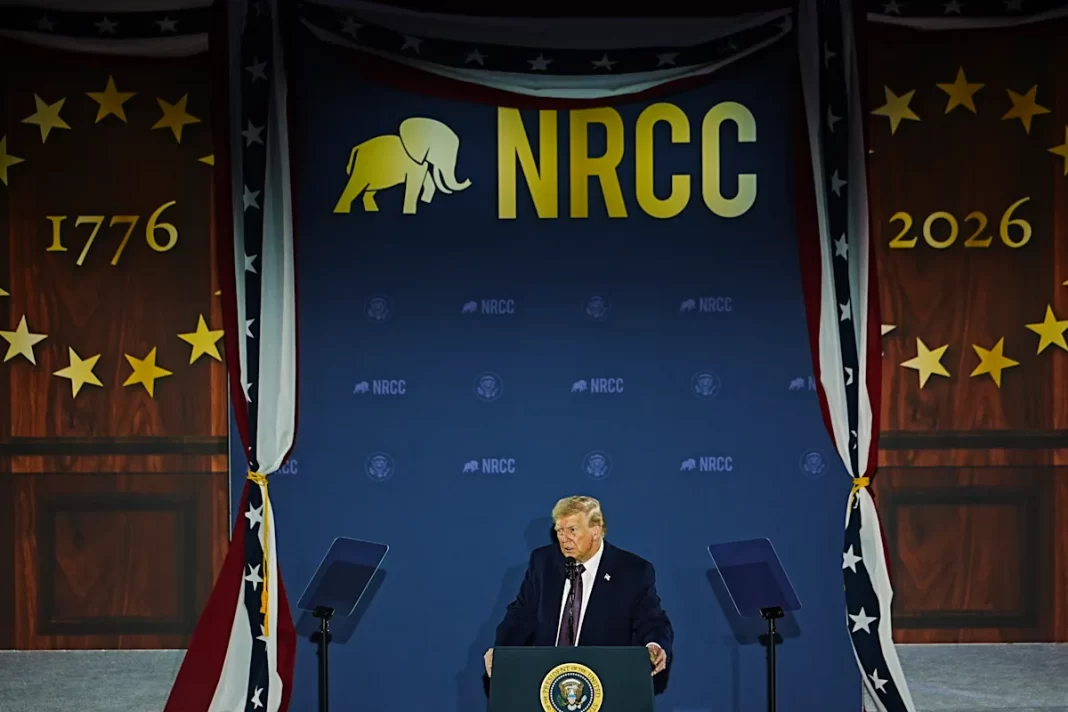
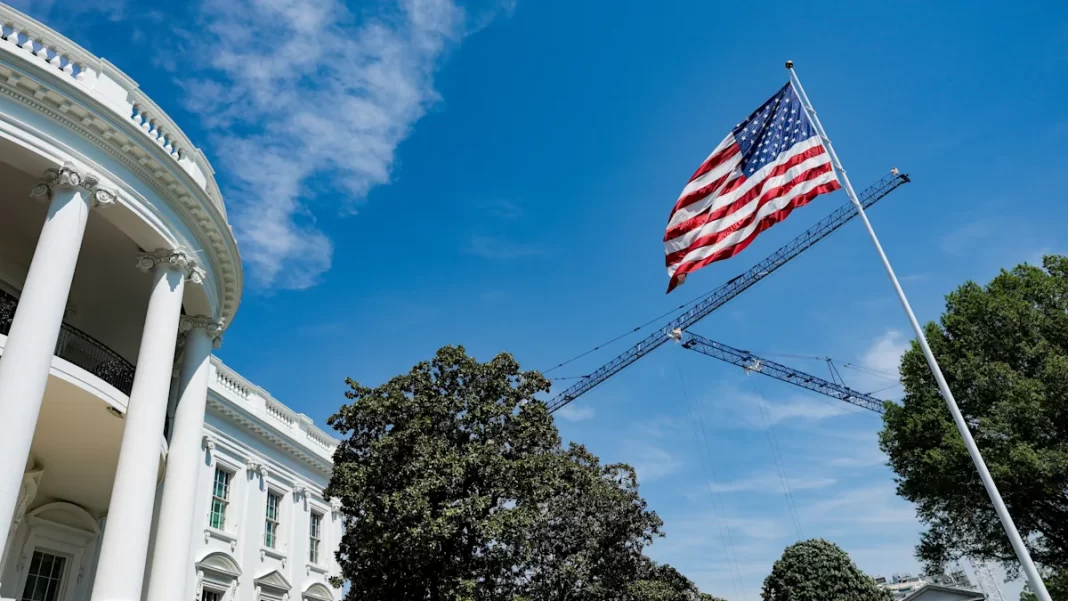

Senate Republicans released a new proposal on Monday that, if passed, would provide $1 billion in new funding for security upgrades to the East Wing of the White House, where President Trump’s new ballroom is being built.
The proposal doesn’t specifically mention the ballroom but instead calls for giving the funds to the Secret Service to support the East Wing Modernization Project, which includes “security adjustments and upgrades” to above- and below-ground security features. The $1 billion is part of a $72 billion immigration bill that Republicans are hoping to pass using a special legislative process that would allow them to get around the Senate filibuster.
The Trump administration applauded the proposal on Monday, arguing that it would provide much-needed support for “long overdue” enhancements to the White House. “Congress has rightly recognized the need for these funds,” White House spokesman Davis Ingle said in a statement.
From the beginning, Trump has said that all of the money to build the 90,000-square-foot event space would come from “Patriot Donors and Contributors.” So, when the $1 billion funding proposal was announced, critics of Trump’s plan to build the ballroom seized on the news as an opportunity to accuse Trump of breaking his pledge that “not one dollar of Taxpayer money” would be spent on the project.
Republicans pushed back, asserting that the $1 billion would only go toward security upgrades and that the ballroom itself would still be built exclusively by private donations. A spokesperson for Republican Sen. Chuck Grassley, who chairs the Senate committee that wrote the bill, told Politico that the proposal “does not fund ballroom construction” and instead provides funds to “ensure all presidents, their families and their staffs are adequately protected.”
A group of Republican lawmakers proposed a bill last week that would have provided $400 million for the ballroom itself, which they argued is necessary to ensure the president’s safety in the wake of the attack at the White House Correspondents’ Dinner on April 25. That bill, which appears to have slim odds of passing, is separate from the GOP’s latest, security-focused proposal.
Shifting price tags

President Trump looks through a window to observe construction work on his new ballroom on Jan. 9.
(Saul Loeb/AFP via Getty Images)
Even after putting the $1 billion that senators proposed aside, the price tag for Trump’s ballroom has risen dramatically since it was first announced. When the White House released the first official plans for it last July, the full cost of the project was quoted at $200 million.
“President Trump, and other patriot donors, have generously committed to donating the funds necessary to build this approximately $200 million dollar structure,” the White House wrote in a statement at the time. “The United States Secret Service will provide the necessary security enhancements and modifications.”
In October, Trump told reporters that the cost of building the ballroom was “about $300 million,” with all of the funds still coming from private donors. A few days later, he said that “over $350 million” had been raised for the ballroom. Then in December, Trump described the project as a “$400 million ballroom.” The quoted price remains at $400 million today.
Trump addressed the increasing costs of the ballroom in a Truth Social post on Wednesday.
“The only reason the cost has changed is because, after deep rooted studies, it is approximately twice the size, and a far higher quality, than the original proposal, which would not have been adequate to handle the necessary events, meetings, and even future Inaugurations,” he wrote.
He also accused the media of trying to “make it look like there was a cost overrun” and said that the project is “coming in ahead of schedule, and under budget!”
In October, the White House released a list of about three dozen companies and individuals who had provided donations to fund the ballroom’s construction, including major tech companies, cryptocurrency companies and defense contractors. According to the New York Times, there were a number of other donors who were not included on the list because they preferred to keep their donations a secret.
What we know about planned security upgrades

An excavator clears rubble after the East Wing of the White House was demolished on Oct. 23, 2025.
(Eric Lee/Getty Images)
The East Wing of the White House, which the Trump administration demolished in October to make room for the ballroom, sat on top of a secure underground bunker called the Presidential Emergency Operations Center, which was first built during World War II.
It’s unclear how much, if any, of that bunker still exists. But the White House has announced plans to construct a new, much larger security complex underneath the ballroom.
“The military’s building a massive complex under the ballroom, and that’s under construction and we’re doing very well,” Trump said on March 29. “The ballroom essentially becomes a shed for what’s being built under.”
Details about the bunker have mostly remained secret, but Trump has discussed some of the elements that will supposedly be included.
“We have bio defense all over,” he said on March 31. “We have secure telecommunications and communications all over. We have bomb shelters that we’re building. We have a hospital and very major medical facilities that we’re building. We have all of these things.”
The Senate Republicans’ spending proposal would authorize the $1 billion to be spent on “above-ground and below-ground security features.”
In a legal filing last month, the administration listed a variety of planned security features that would presumably be built above the ground, including “protective missile resistant steel columns, beams, drone proof roofing materials, and bullet, ballistic, and blast proof glass.”
Security funding could be a boon for the ballroom project overall

Construction work on the White House ballroom.
(Andrew Harnik/Getty Images)
Beyond providing funds for security features, the Republican proposal — if passed — might also help clear some of the legal hurdles that have hindered construction on the ballroom. In March, a federal judge ruled that the non-security elements of the ballroom cannot be built unless Congress expressly authorizes its construction. A series of legal decisions have allowed work on the ballroom to continue temporarily, but the lack of formal congressional approval still lingers as a potential threat to the project.
If Republicans’ security funding becomes law, that could give the Trump administration’s lawyers stronger footing to argue in court that the legislature has signed off on its complete plan to renovate the East Wing of the White House, the ballroom included.
Republicans can pass the security funding on their own using a special process called reconciliation, but the GOP’s narrow majorities in both chambers of Congress mean that even a handful of dissenters within their party could be enough to sink the proposal.