
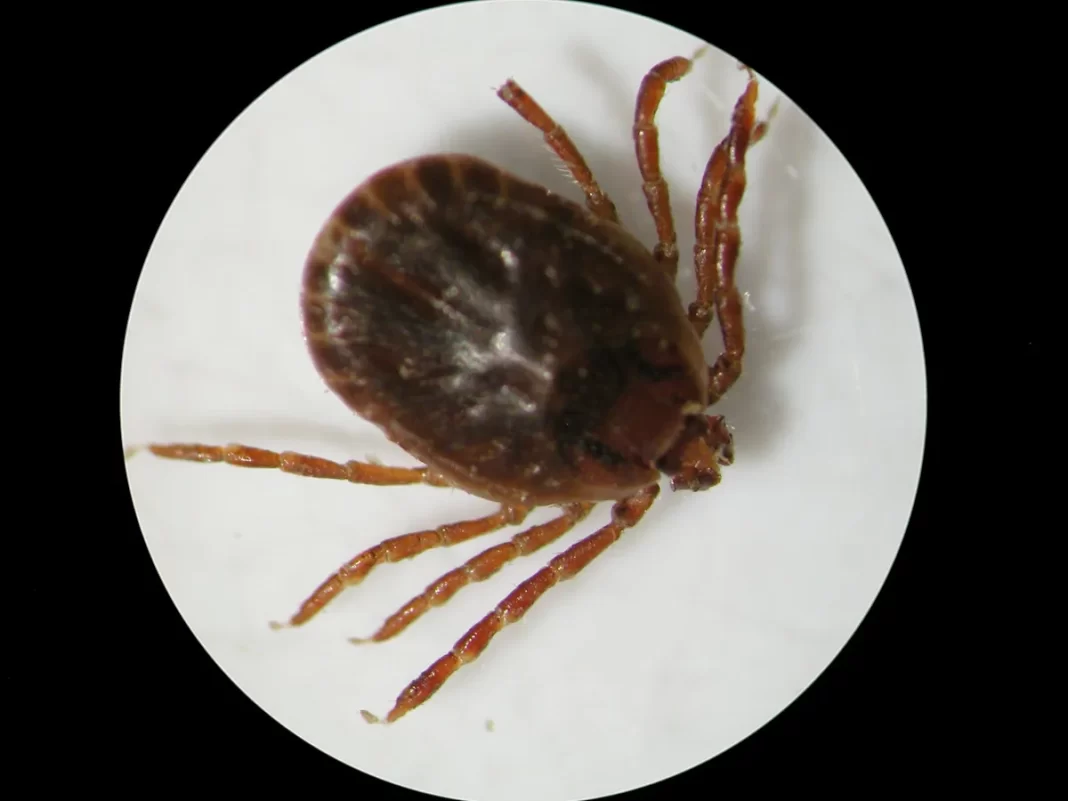

Researchers with the University of Arkansas Division of Agriculture will host a free webinar later this month to discuss the growing spread of the Asian longhorned tick and a tick-borne cattle disease that has expanded across Arkansas, including several counties in the River Valley.
The webinar is scheduled for 11:30 a.m. CDT on May 22 and will feature Kelly Loftin, extension entomologist, and Kirsten Midkiff, extension animal health and wellbeing specialist, both with the Division of Agriculture.
The webinar is free to attend, but registration is required.
Officials said the webinar will provide updated information on where the Asian longhorned tick and the pathogen Theileria orientalis have been detected in Arkansas, along with testing recommendations, infection rates, tick management strategies and cattle management practices. Veterinarians also will participate in a question-and-answer session about their experiences with theileriosis.
In the River Valley, Franklin County has confirmed cases of the Theileria orientalis Ikeda genotype, Johnson County has confirmed cases of the Chitose genotype, and Logan County has confirmed cases of both the Ikeda and Chitose genotypes.
The Asian longhorned tick was first confirmed in the United States in 2017 and in Arkansas in 2018. Researchers said the tick has spread steadily across the eastern United States and has now been detected in 23 states as far west as Oklahoma.

Researchers will discuss the spread of the Asian longhorned tick and cattle disease cases reported in River Valley counties.
Researchers with the Division of Agriculture have been tracking the spread of the tick and the pathogen for several years through a USDA-funded study. According to an April report from the Division of Agriculture, the Asian longhorned tick had been confirmed in 10 Arkansas counties as of September 2025, while one or both genotypes of Theileria orientalis had been confirmed in 17 counties.

Researchers will discuss the spread of the Asian longhorned tick and cattle disease cases reported in River Valley counties.
“When we held our first Theileria/Asian longhorned tick webinar in May 2024, two counties had confirmed cases of theileriosis genotype Ikeda, and two had established Asian longhorned tick populations,” Loftin said. “Now we are at 15 counties with confirmed T. orientalis Ikeda and 10 with established Asian longhorned tick populations. We anticipate that these numbers will grow.”
Midkiff said symptoms in cattle often resemble anaplasmosis and can include weight loss, reduced milk production, loss of appetite, anemia and reproductive losses.
Researchers said severe winter weather does not eliminate the tick population because the ticks remain protected in leaf litter and become active again when temperatures rise.
There is currently no treatment for Theileria, according to researchers. Mortality rates in cattle typically range from 1 percent to 5 percent but have been reported as high as 50 percent in some cases, according to the U.S. Department of Agriculture. Researchers emphasized that the pathogen poses no known risk to humans.
This article originally appeared on Fort Smith Times Record: Webinar to address spread of tick-borne cattle disease