
One American has tested positive for a rare strain of the Ebola virus in the Democratic Republic of the Congo (DRC), and six others have been exposed, the U.S. Centers for Disease Control and Prevention said Monday.
“I can now confirm that there is one case of Ebola in an American who is exposed as part of their work in the Democratic Republic of Congo,” Dr. Satish Pillai, the CDC’s Ebola response incident manager, said during a conference call. The Associated Press reported that the person who tested positive is an American doctor.
They developed symptoms over the weekend and tested positive late Sunday, Pillai said.
There are more than 500 suspected cases and 130 suspected deaths as of Tuesday, Tedros Adhanom Ghebreyesus, director-general of the World Health Organization, said, adding he was “deeply concerned about the scale and speed of the epidemic.”
The CDC is working with the State Department to transport the Americans with or exposed to Ebola to Germany for treatment and monitoring, Pillai said.
Pillai added: “The risk to the United States remains low.”
Here is all you need to know about the outbreak, which has been declared a public health emergency by the World Health Organization.
Where is the Ebola outbreak?
As of May 19, there were over 513 suspected cases and 131 deaths in the DRC and one death in neighboring Uganda, according to the WHO.
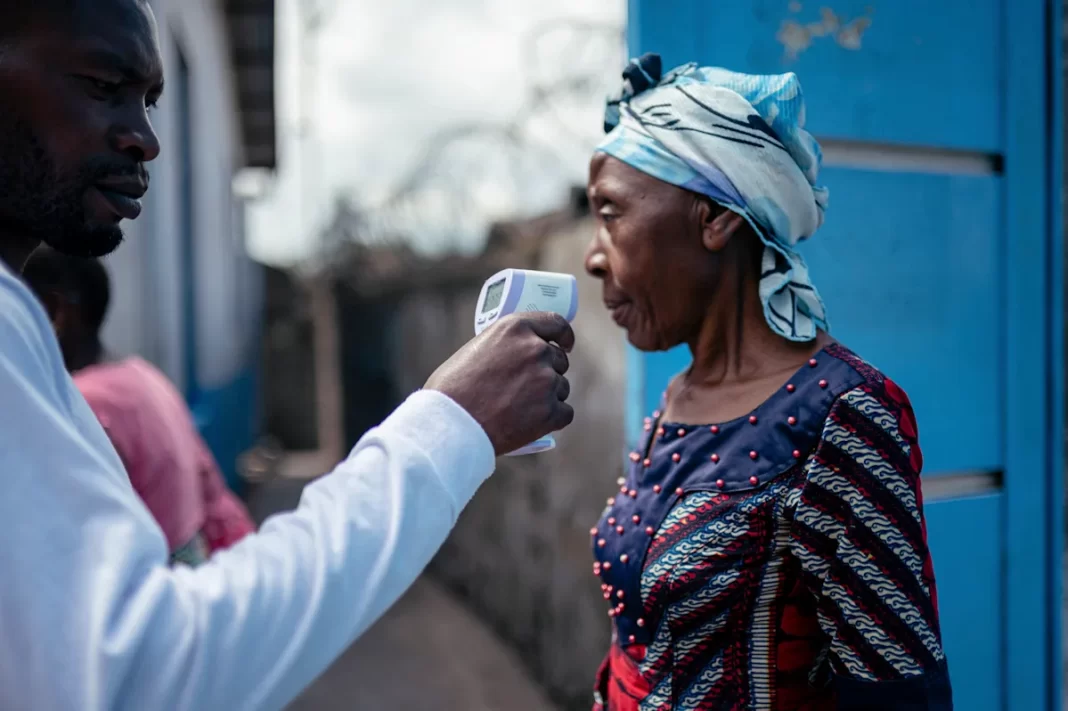
The CDC advised Americans in DRC and Uganda to “practice enhanced precautions” and avoid people with symptoms.
The earliest known suspected case, a 59-year-old man, developed symptoms on April 24 and died at a hospital in Ituri on April 27. Ituri is a remote province in DRC, more than 1,700 miles from the capital, Kinshasa.
A close contact of the first suspected victim died on April 28 after also presenting with symptoms, according to the Africa CDC.
What to know about this Ebola strain
The current strain of Ebola is caused by the rare Bundibugyo virus, which was first detected in 2007. There are no approved drugs or vaccines for the strain.
More than 20 Ebola outbreaks have taken place in DRC and Uganda, but this is only the third time that the Bundibugyo virus has been detected.
The fatality rate for the Bundibugyo strain is estimated to be between 25% and 40%, according to Doctors Without Borders.
What is the U.S. doing to help curb the Ebola risk?
As international concerns rise over the Ebola outbreak, the U.S. is suspending entry for some travelers for 30 days to reduce the risk, the CDC said Monday.
The federal agency issued an order suspending the entry of non-U.S. passport holders who departed from, or were in, the DRC, Uganda or South Sudan during the last 21 days.
The CDC said it is coordinating with airlines, international partners and port-of-entry officials to “identify and manage travelers who may have been exposed to Ebola virus.”
What has the WHO said?
The WHO has declared the Ebola disease outbreak a public health emergency of international concern. But it said the outbreak does not meet the criteria for a pandemic emergency like COVID-19 and advised against closing international borders.
“First, beyond the confirmed cases, there are more than 500 suspected cases and 130 suspected deaths. These numbers will change as field operations are scaling up, including strengthening surveillance, contact tracing, and laboratory testing,” Tedros Adhanom Ghebreyesus, director-general of the World Health Organization, said on Tuesday
He previously said there were “significant uncertainties” regarding “the true number of infected persons and geographic spread.”
He added: “In addition, there is limited understanding of the epidemiological links with known or suspected cases.”
What are the symptoms?
The Ebola virus is highly contagious and causes a rare but severe and often fatal illness in people.
Symptoms include fever, vomiting, diarrhea, muscle pain and bleeding.