

Many Americans rejoiced on Tuesday after the U.S. House of Representatives passed a bill that would make daylight saving time permanent nationwide and end the biannual chore of changing the clocks to “spring forward” and “fall back.” It now heads to the Senate, where its future looks dim.
After the lopsided 308-117 vote, Republican Rep. Gus Bilirakis of Florida dismissed America’s “twice-yearly clock change” as “a relic of the past that no longer reflects the way Americans live, work and conduct business in the 21st century.”
Or, as one of the Sunshine Protection Act’s most prominent supporters, President Trump, wrote on social media in May, “this is an easy one!”
It means “a longer, brighter Day,” Trump enthused. “And who can be against that?”
The answer, it turns out, may be enough senators to prevent the bill from becoming law.
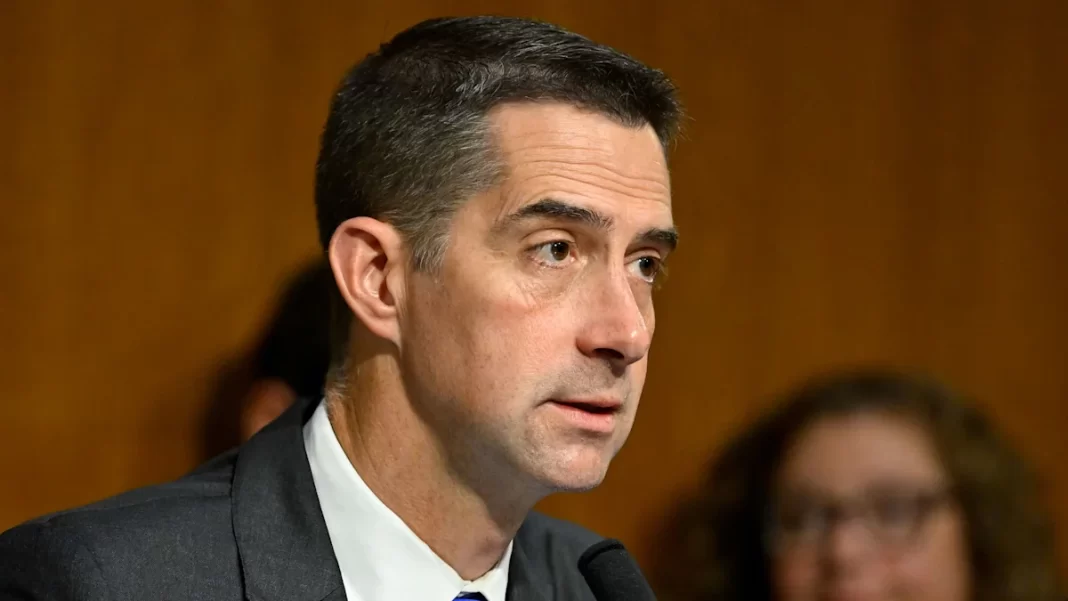
In a floor speech last year, Sen. Tom Cotton of Arkansas — a Republican who usually aligns with Trump — said that “advocates for permanent daylight saving time try to put, well, a sunny face on this bill,” claiming it “would mean ‘more daylight hours’ and ‘more smiles.'”
But the truth, Cotton continued, would be much darker (pun intended). Daylight saving time doesn’t actually create more daylight, of course. It simply adjusts the clocks so an hour of daylight that would normally occur in the early morning instead occurs in the evening.
“By moving the clock back an hour in winter, permanent daylight saving time would push winter sunrises to an absurdly late hour, depriving Americans of morning sunshine that is essential for our safety and well-being,” Cotton argued.
On Tuesday, Semafor reported that Cotton “still opposes the permanent daylight saving time bill” and that he “is not alone.” The outlet then listed a dozen other senators — Republicans and Democrats — who serve on the Senate Commerce Committee and previously voted against making daylight saving time permanent:
John Thune of South Dakota
Roger Wicker of Mississippi
Ted Budd of North Carolina
Amy Klobuchar of Minnesota
Gary Peters of Michigan
Tammy Duckworth of Illinois
Lisa Blunt Rochester of Delaware
It’s unclear when the Sunshine Protection Act will come up for a vote in the Senate. It’s also unclear whether all of these senators would still oppose it. But if they did, that would be enough to kill the bill — and with it, Trump’s dream of “a longer, brighter Day,” which 56% of Americans say they share.
So what’s the objection here?
It’s the geography, stupid. Permanent daylight saving time would lock the clocks in “spring forward” mode, shifting the entire country toward more daylight in the evening and less in the morning.
For coastal and Southern states, the benefits of brighter evenings tend to outweigh the costs of darker mornings, even in the winter — which helps explain why the Sunshine Protection Act has drawn much of its support from these regions. Where Trump lives in West Palm Beach, Fla., for example, the shortest day of the year would see the sun rise at about 8:04 am and set around 6:32 pm. That’s normal-ish enough.
But elsewhere, the cost-benefit calculus is different.
Latitude is half of the equation. Northern states already have shorter winter days than Southern states, so moving sunrise back an hour would keep residents in the dark well after the start of school and work.
Then longitude factors in as well. Time zones are wide, so if you live on the far eastern edge of one of them (like Boston), the sun rises relatively early. But if you live on the far western edge of the same time zone (like Detroit), the sun rises nearly an hour later.
The result, under permanent daylight saving time, would be winter sunrises approaching 9:00 a.m. the farther north you go, and start to creep past 9:30 a.m. toward the northwestern corners of each U.S. time zone. In parts of Alaska, the sun wouldn’t rise until 11:15 am.
Cotton argued last year that this “would be especially harmful for schoolchildren and working Americans.”
“Kids would either walk to school in the pitch black or schools would have to push back start times,” he claimed. “Meanwhile, construction workers, farmers, and others who rise before the sun or who need the sun to work … might go three, four or even five hours in the morning without seeing the sun, which would hurt their quality of life and, potentially, their safety in the workplace.”
The senators who previously opposed the Sunshine Protection Act in committee disproportionately hail from states where the sun would rise after 8:30 a.m. in the winter under permanent daylight saving time — so they likely share at least some of Cotton’s concerns.
In last year’s floor speech, Cotton noted that the U.S. has tried permanent daylight saving time before. Congress passed a law that suspended the “fall back” in 1974, but public opinion turned so sharply against the idea once it was enacted — dropping from 79% support to 42% in just three months — that the experiment was abruptly ended the following year. Dark morning commutes turned out to be very unpopular.
“It is said that those who don’t learn from history are doomed to repeat it,” Cotton said, predicting that the same thing would happen again “if Congress passes the so-called Sunshine Protection Act.”
Experts widely agree that ending America’s twice-yearly clock changes would be a good move. Why? Because the change itself creates ripple effects as people adjust to lost sleep and disruptions to their circadian rhythms. But experts also say permanent daylight saving would make it harder to fall asleep at night and harder to wake up in the morning. Instead, the American Medical Association, the American Academy of Sleep Medicine and many leading researchers support permanent standard time, which better aligns the human body with the natural light-dark cycle.
Cotton considered permanent standard time in his floor speech. But ultimately, he sided against it, arguing that most Americans would be unwilling to “sacrifice the extra hour of evening light in the spring and summer for Little League ball games and summer vacations across the country.”
His conclusion: Stick with the status quo rather than force some parts of the country to suffer while others benefit.
“I don’t like the biannual clock changes any more than the rest of you do,” Cotton said at the time. But “not every human problem has a legislative solution. Sometimes we have to live with an uneasy compromise between competing priorities and interests.”
“That is doubly true,” he added, “when considering how the movement of the stars and the planets affects the lives of 350 million souls spread across our vast continental nation.”