
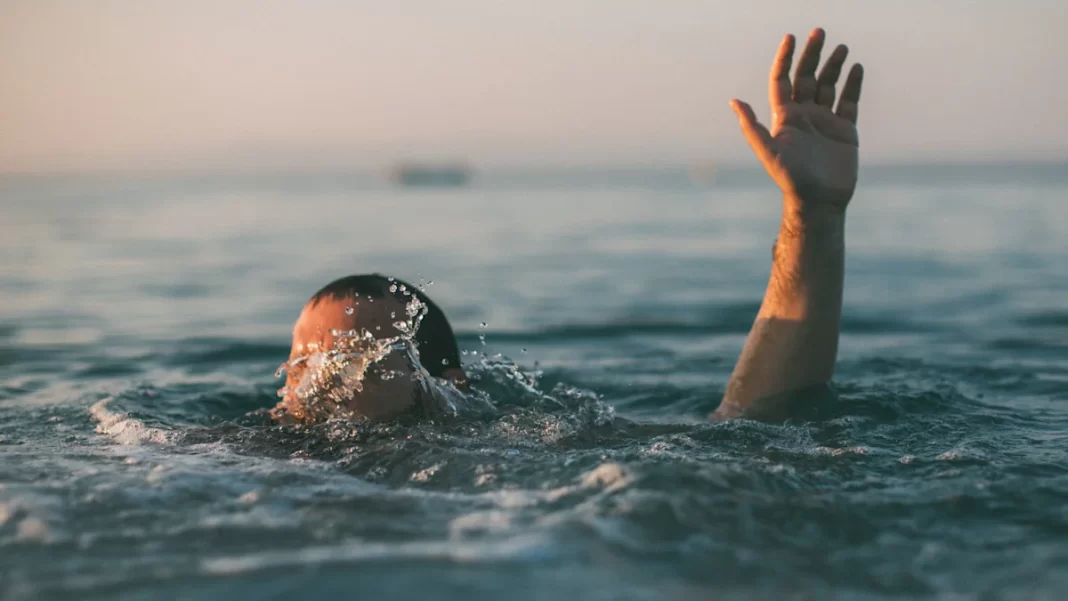

You’re at the beach — and you see someone struggling in the water. What do you do?
That’s the question that is on many people’s minds this week after a viral video showed a 16-year-old lifeguard rescuing a boy who was swept up by the waves on a beach in Santa Cruz, Calif. While bystanders attempted to help, ultimately, they weren’t able to get the child out of the ocean — and some fell in the harsh waves themselves in the process, illustrating how challenging it can be to ensure someone who is struggling reaches shore safely. But while the lifeguard successfully did his job — and was invited to the White House by President Trump for his heroism — that does not mean any person on the beach should follow his lead.
“It’s wonderful that people want to help, but it is extremely dangerous for an untrained bystander to go into the ocean and try to effect a rescue,” Tom Gill, president of the United States Lifesaving Association, tells Yahoo. “We don’t want anybody else to drown. The same reason you shouldn’t run into a burning house, you shouldn’t run into the ocean to help someone when you are untrained.”
Gill says that, unlike the average beachgoer, lifeguards undergo extensive training in surf rescue, including first aid and CPR. Their fitness levels are also assessed to ensure they can handle a water rescue. The average person, while trying to be helpful, could do more harm than good in a situation they aren’t prepared for — and are far more likely to put their own lives at risk.
But that doesn’t mean you should do nothing if you see someone struggling in the water, Alissa Magrum, the executive director of the National Drowning Prevention Alliance, tells Yahoo. The first step is to get a lifeguard’s attention. If there is no lifeguard available, call 9-1-1 for assistance.
There are things you can do to help from the shore, if possible, Magrum says. “We say, ‘Reach or throw, don’t go,'” she explains, stating that you should attempt to throw or toss a flotation device to a person who is struggling, such as an inner tube, pool noodle or boogie board. If these things aren’t available, anything that floats, such as a cooler, can be helpful.
Magrum stresses that it is very important to leave the rescuing up to lifeguards — but she also acknowledges that “people are people,” and many will dive into the water regardless. If you can’t stop yourself from jumping into action despite expert advice telling you otherwise, Magrum says you must bring a flotation device with you.
How to avoid ocean emergencies in the first place
There are certain best practices for going to the beach that can make your day safer overall, the experts say. That includes going to beaches with lifeguards and only swimming when they are on duty.
“Swim near a lifeguard who’s on duty,” Gill says. “When the lifeguards go home, people should just enjoy themselves on the beach and not put themselves in a dangerous situation.”
And if you’re not a strong swimmer, Magrum says it’s best not to get in the water beyond your ankles, even if there is a lifeguard nearby.
“Most people learn how to swim in a pool,” she explains. “It’s calm. It’s clear. It’s shallow, and there are ladders and steps to get out. Then they go to the beach and think that experience is going to be the same, and it’s just not.”
Strong swimmers who want to get in the ocean without a lifeguard present should be aware of conditions that can make it more difficult, such as learning to spot rip currents, which can drag you out to sea. A warning flag system, in place at many beaches, can tell you how safe the ocean is to swim in, and whether you should take extra precautions or not go in at all.