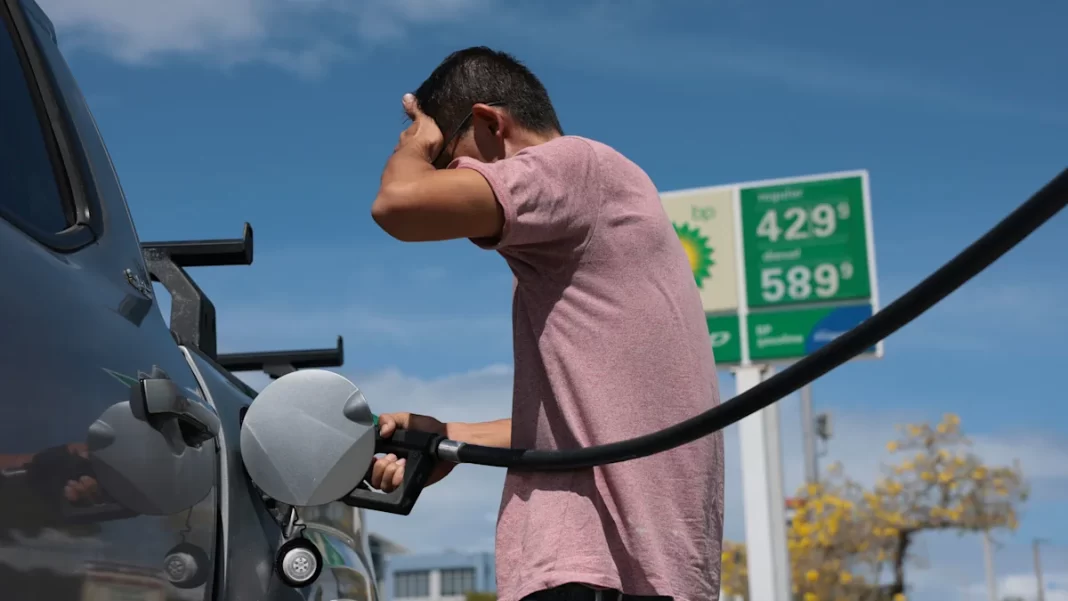

Once upon a time, the average price of a gallon of regular gasoline in the United States was under $3. But that was before Feb. 28 — the day America launched attacks against Iran.
Now, amid renewed hostilities in the Middle East, gas has once again crossed the $4-per-gallon mark, according to AAA, defying President Trump’s recent claim that “GAS PRICES [are] COMING DOWN, FAST!”
So is $4 gas the new normal? For months, millions of cash-strapped Americans have been hoping it won’t be. Yet there are several reasons to believe our collective pain at the pump could persist into next year, or beyond.
A Strait of Hormuz deal seems… elusive
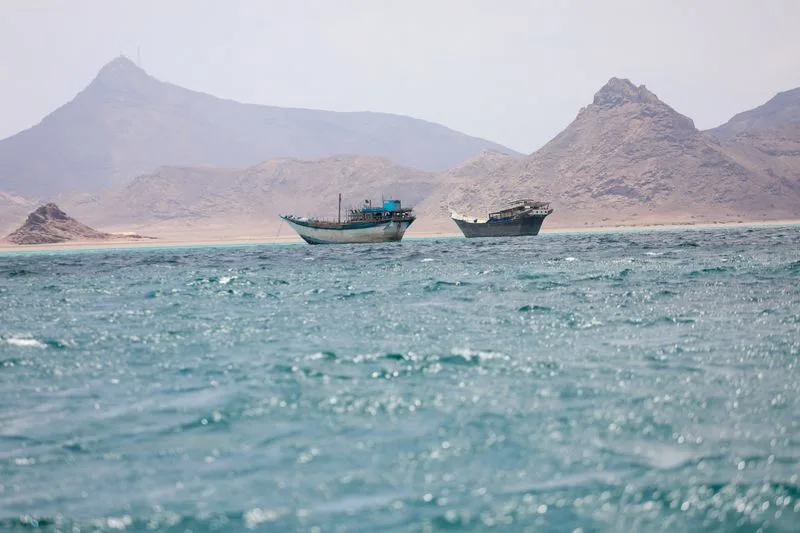
U.S. gas prices have been fluctuating along with the status of the Strait of Hormuz, a narrow, winding waterway along Iran’s southern coastline that connects the Persian Gulf to the rest of the globe.
Before the war, one-fifth of the world’s oil flowed through the strait. But Tehran quickly realized it could gain leverage over the U.S. by choking off supply. It has been stubbornly sticking to that strategy ever since.
The international “benchmark” for oil prices is called Brent crude. Brent is a type of oil, mostly from the North Sea. Traders effectively place bets on the future price of oil by buying and selling Brent “futures” on financial markets, which in turn affects the price of oil itself. Real-world events drive their decisions to buy or sell. Brent crude is easy to refine into gasoline, so gas prices tend to rise and fall along with Brent prices.
When the Strait of Hormuz initially shut down, U.S. gas prices hit an average of $4 a gallon for the first time since Russia invaded Ukraine in 2022. The first month of the war saw the steepest price increase in 30 years. By May, prices had topped $4.50 a gallon.
In recent weeks, it had seemed like oil tankers trapped in the Persian Gulf would start moving again. On June 14, the U.S. and Iran signed a memorandum of understanding meant to reopen the strait, and gas prices dipped below $4 a few days later. They fell as low as $3.79 in early July, while the ceasefire held.
But now the ceasefire has collapsed. Iran has resumed its attacks on ships trying to exit the strait, and the U.S. has retaliated with continued airstrikes and a renewed blockade on Iranian ports. As a result, the international benchmark oil price has returned to $90 a barrel, and the average price of a gallon of gas has risen by 13 cents over the last week alone.
For the moment, at least, neither side seems willing to budge. On Sunday, U.S. Secretary of State Marco Rubio said that Iran’s “behavior has to change in order for ours to change”; on Monday, Iran’s Revolutionary Guard warned that “this passage will not be safe for… even a single drop of oil and gas” as long as U.S. strikes continue.
“The decisive question will be whether Iran’s deteriorating economic and infrastructural conditions outpace the rise in energy prices driven by instability in the Strait of Hormuz, or vice versa,” Hamidreza Azizi, an Iranian security expert at the German Institute for International and Security Affairs, wrote on social media.
There’s a new threat to consider as well. On Monday, the Houthis — an armed faction based in Yemen and backed by Iran — said they would impose their own blockade on Saudi vessels attempting to pass through the Bab al-Mandeb Strait, the southern portal to the Red Sea. Saudi Arabia has been using the strait as an alternative to Hormuz since the start of the war. A blockade would affect another 3% of the global oil market, further reducing supply.
According to Tom Kloza, an independent oil analyst and adviser to Gulf Oil, gas prices are already guaranteed to rise another 10 to 25 cents over the next week.
“That’s baked in,” Kloza told CNN.
‘Up like a rocket and down like a feather’
But what if the Strait of Hormuz does fully reopen sometime soon? Even then, experts say prices at the pump still won’t plunge to their pre-war level.
“There’s an old expression — gas prices go up like a rocket and come down like a feather,” Kloza previously explained.
In the case of Iran, four factors will continue to pad the price of gas for the foreseeable future.
First, oil production has basically ground to a halt across the Persian Gulf over the last five months — partly because the region’s oil infrastructure suffered damage and partly because countries such as the United Arab Emirates, Kuwait, Iraq, Oman and Saudi Arabia (the world’s largest oil exporter) ran out of storage space.
An estimated 7.5 million barrels of production per day were shut down starting in March, according to the U.S. Energy Information Administration. Global supply will continue to suffer while these countries play catch-up — a process that could take years, experts say.
Second, exporting oil through the Strait of Hormuz will get more expensive if Iran eventually decides to charge a toll, which it has been threatening to do (along with Oman). The added cost — an estimated $1 per barrel, according to CNN — is likely to be passed on to consumers.
Third, insurance for ships that cross the Strait of Hormuz will likely cost more as well — another expense that could make gas and other petroleum products pricier for Americans.
Finally, retail gas station owners set their prices based on the wholesale price of gas. When oil gets more expensive, that price goes up — but gas stations tend to accept a smaller profit margin on each gallon they sell in order to stay competitive. Then, when the cost of oil starts to fall, they typically try to even things out by hanging onto higher gas prices for as long as possible.
The U.S. now produces more oil than any other country on earth. But it also consumes more, and even though very little of America’s oil is imported from the Persian Gulf, the market is global — meaning everyone is competing for the same barrel of oil. So prices rise everywhere at once.
As long as the Trump administration and Tehran are still tussling over the Strait of Hormuz, U.S. gas prices will remain stubbornly high. And even if they do start to fall, it could take until next year for them to slip under $3 again.