

Austin City Council members were briefed Wednesday on a plan to partially lower Lake Austin this fall so property owners can repair docks, boat slips and other infrastructure. City officials say the drawdown-the first in almost 10 years-also may have the added benefit of stunting the spread of invasive water plants, at least temporarily.
The city first announced it was considering a drawdown in late July at the request of property owners. The Lower Colorado River Authority, which manages the lake, approved the plan on Aug. 20. It calls for draining the lake between Mansfield and Tom Miller dams by about 10 feet. The process will begin Oct. 12 with lake levels expected to be replenished by Nov. 30.
During Wednesday’s discussion, council members Marc Duchen and Paige Ellis asked city staff about the timing of the drawdown, including whether property owners would have enough time to obtain required permits and whether it could conflict with a busy season for local businesses.
Duchen said he wanted the city to continue gathering feedback to ensure officials were on the right track, emphasizing that the drawdown is a complicated process that has not been carried out in nearly a decade.
“We want to keep our ears on the ground, make sure we monitor the feedback that we’re hearing from the community who may be either taking advantage of this or otherwise impacted by this,” he said.
The city requires permits to construct new boat docks, repair existing docks and bulkheads, and to remove sediment from the lakebed. Austin Development Services is developing a special application for minor dock and bulkhead repairs that will be posted on the city’s website in the coming weeks. Some projects may require permits from the Texas Parks and Wildlife Department.
The city is hosting an open house from 6 p.m. to 8 p.m. on Sept. 9 where residents and property owners can get more information about the drawdown, including what types of permits they might need to obtain. The event will be held at the Permitting and Development Center, 6310 Wilhelmina Delco Drive, Meeting Room 1407.
The LCRA said it would drain the lake by no more than about 1 foot per day and that it could take as long as three weeks for it to reach its target range of just over 481 feet above mean sea level. The authority will begin refilling the lake Nov. 24, with water released from Lake Travis at a rate of up to 2 feet per day.
Public boat ramps along Lake Austin will be closed during the drawdown, and swimming will be prohibited at Emma Long Metropolitan Park. Property owners should not leave unattended equipment in the exposed lakebed, officials said.

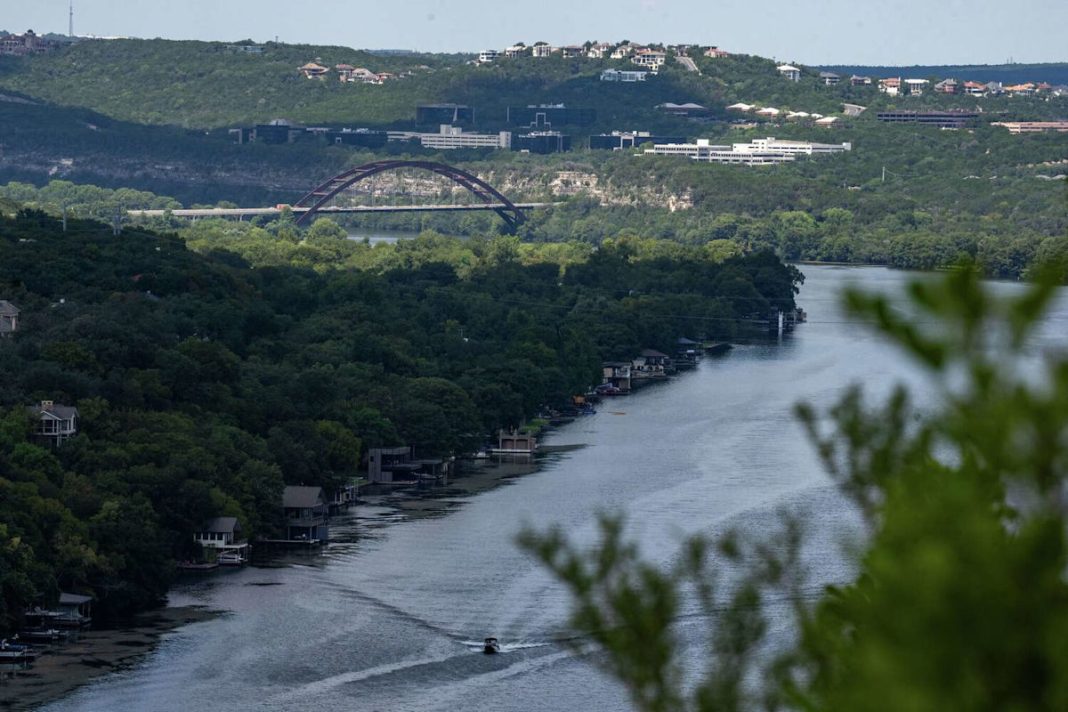
A boat travels on Lake Austin on Monday June 29, 2026 in Austin. (Aaron E. Martinez/Austin American-Statesman)
Property owners will be allowed to use the exposed lakebed to repair shoreline structures, dredge boat slips, remove debris and manage vegetation. The Austin Fire Department and Austin Parks and Recreation also plan to use the lowered water levels to complete maintenance projects.
City staff told council members Wednesday the lake had not been lowered in nearly a decade because of ongoing drought, the lack of a formal process for deciding when to conduct a drawdown and the absence of community requests until invasive vegetation became a concern.
The last time the lake was partially lowered was in 2017.
The LCRA previously conducted the drawdowns in the winter months. After Winter Storm Uri in 2021, the authority decided it would conduct them at other times of year so hydroelectric generators would be available to support the power grid during freezes.
The shoreline property owners who requested the drawdown have said they hope lowering the lake will kill invasive vegetation near the shoreline, including hydrilla and Eurasian watermilfoil.
But city staff determined in October that the drawdown would likely reduce the vegetation only temporarily and would have little long-term effect. In some cases, staff found that lowering the lake could even encourage hydrilla to sprout.
Austin Watershed Protection has introduced nonnative grass carp to eat the vegetation. The department has stocked about 5,000 fish in the lake since late July and plans to add more this fall.
Sign up for the Daily Briefing from the Austin American-Statesman. Start your day with the must-read headlines from Austin’s most trusted news source.
This article originally published at Lake Austin will be partly drained this fall. Expect closed ramps and no swimming..