
Running for office is a significant decision and not one to take lightly. Campaigning will fundamentally change your lifestyle, causing a near-total loss of your personal privacy and a significant financial impact.
Running for office successfully usually requires candidates to campaign and finance their efforts, usually raising and spending about $1 million to several million for competitive congressional races (and far more for statewide or presidential campaigns).
Beyond the financial burden, candidates may also face intense scrutiny of their personal lives. This may include the media and public evaluating their character, qualifications for office, and any potential hypocrisy.
Opposition research, social media exposure, and press coverage mean that nearly every aspect of a candidate’s background can become public. For many potential candidates, this loss of privacy alone is enough to deter them from ever running.
Despite these personal costs, the decision to run for a political office is foundational to our democracy. Running to represent your constituency is one of the best ways to civically participate.
“One of the penalties for refusing to participate in politics is that you end up being governed by your inferiors,” Plato warned.
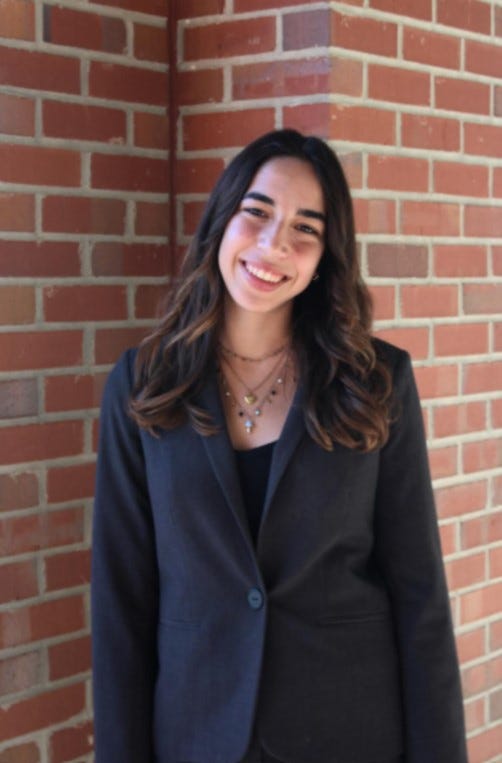
Emily Gregory, a first-time Democratic candidate, just flipped District 87 of the Florida House of Representatives (the greater Palm Beach coast area). Her win was unexpected, with a two percentage point lead over Republican Jon Maple in a district that includes Trump’s home, Mar-a-Lago.
“I might have done some crazy calculus to decide that this was a flip opportunity, but it was,” representative-elect Gregory said.
This win is especially surprising as the previous winner of District 87 was a Republican by a margin of 19 points. Gregory’s campaign leaned heavily on grassroots organizing and door-to-door canvassing, strategies that allowed her to connect directly with voters who felt overlooked in a district considered a Republican stronghold.
Political analysts noted that her emphasis on kitchen-table economic issues — rent, groceries, and healthcare costs — resonated with voters regardless of party affiliation.
“It’s important to have candidates who are willing to run for office, as this upholds the U.S. democratic ideals and political participation in general,” biological sciences major at Florida State University, Quinn Wood, said to the FSView.
Safe districts, also known as safe seats, are electoral districts where single political parties consistently have an advantage and a high likelihood of winning. This also leads to partisan polarization as the candidate from the dominant political party usually wins more than 60% of the total vote.
“In my primary elections class, we’re learning about how in competitive elections in ‘safe districts,’ it’s important to run for office anyway because you never know when people are going to show up and vote for you. It’s important to show up for people you want to represent, even if their voices are quiet,” Emma Claire Goldstein, a first-year political science student at FSU, said.
The effects of safe districts extend beyond just Election Day. When voters believe the outcome is predetermined, turnout often drops, creating a self-reinforcing cycle in which low participation further entrenches the dominant party. Candidates who run against the odds in these districts, even when they lose, can help break that cycle by raising awareness of local issues and building the organizational infrastructure needed for future, perhaps successful, political campaigns.
A research study from Yale University highlights comprehensive historical evidence of the rise of safe seats in U.S. House districts and shows that this trend coincides with the greater divergence of legislators’ preferences not just between but also within parties.
As legislators drift further from the political center, compromise and finding common ground become harder, and gridlock becomes more common. Experts argue that one remedy is recruiting more candidates willing to compete in unfavorable districts, not necessarily to win immediately, but to gradually shift the political landscape over successive election cycles.
“If you have just one party that’s constantly winning, it makes the people feel like they don’t have a say in what’s happening. You lose hope that you actually have an impact on your government,” Verona Farfan, an environmental science and policy student at FSU, said to the FSView.
Still, stories like Gregory’s serve as a reminder that no district is permanently unattainable.
When candidates are willing to pay the personal and financial costs of running, even in races they are not favored to win, they keep the democratic process alive and signal to their communities that their voices are worth fighting for.
Kayra Serpenguzel is a political science and creative writing major at Florida State University and a Staff Writer for the Views section of the FSView & Florida Flambeau, the student-run, independent online news service for the FSU community. Email our staff at contact@fsview.com.
This article originally appeared on FSU News: Why you should run for public office