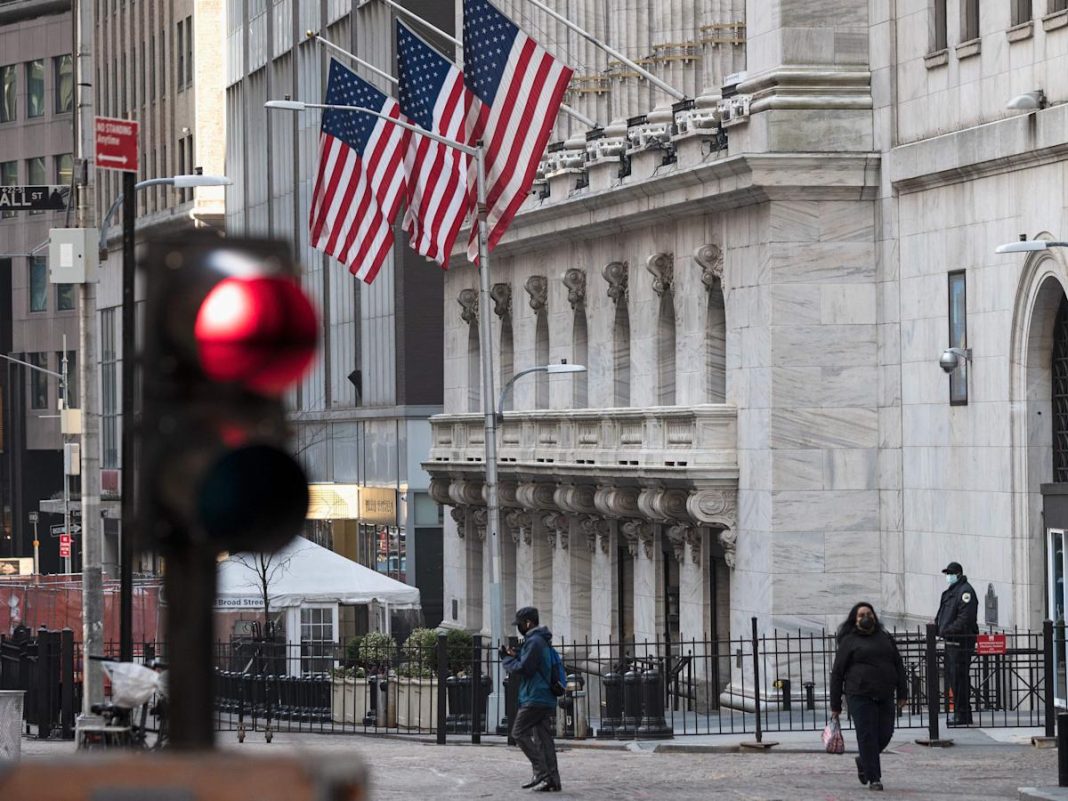

US stocks plunged, with losses on Friday driving the Nasdaq 100 to its worst week since April 2025
A strong jobs report is positive for the economy, but has dashed rate cut hopes for this year.
Investors now see a 70% chance the Fed will hike rates this year.
Good news is bad news for markets this Friday, as stocks tanked hard after a key economic update.
It was another amazing month for the US job market, but that wasn’t really what investors wanted to hear. US employers added 172,000 jobs in May, far more than the 88,000 economists were expecting. The unemployment rate was unchanged at 4.3%.
It’s a positive signal for the US economy, suggesting that employers haven’t yet been deterred by hotter inflation and lingering uncertainty over the US-Iran war.
But for markets, a red-hot jobs report has come to mean one thing: say goodbye to rate cuts.
Stocks plummeted as investors dumped high-flying growth stocks across tech and AI. The Nasdaq 100 plunged nearly 5%, recording its worst single-day loss since October of last year and its worst weekly loss since Liberation Day. The S&P 500 snapped a nine-week streak of gains, its longest winning run since 2023.
Here’s where US indexes stood at the 4 p.m. ET closing bell:
Investors look to be taking profits, especially in the semiconductor sector, Louis Navellier, the CIO of Navellier & Associates, wrote in a note.
“Equity markets paused following an historic run, heading for the first losing week in 10,” Mark Hackett, the chief market strategist at Nationwide, wrote in a note on Friday. “As market indexes settle, it is important to look below the surface for signs of investor risk tolerances,” he added, pointing to the momentum in the chips sector in recent months.
The logic goes like this: Investors have been waiting for months for lower interest rates, something that’s expected to boost the price of risk assets, like stocks. But there are two things that stand in the way of the Fed loosening monetary policy: higher inflation, and a strong labor market.
On the inflation side, markets already knew that the central bank had less room to cut rates than it did prior to the start of the US-Iran war. Inflation accelerated to its hottest pace in about three years in April, largely due to the recent surge in energy prices.
But now, hiring looks like it’s tipped out of favor for rate cuts as well. If the job market were struggling, there might be a stronger case for the Fed to cut rates to boost economic growth.