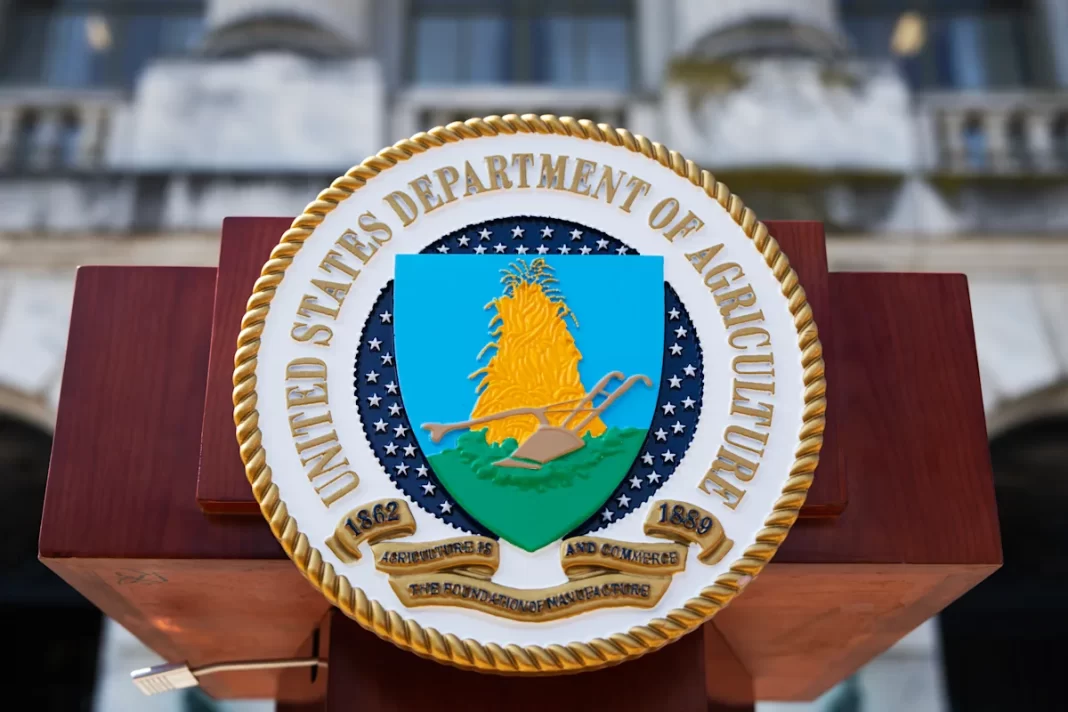

Last week, the U.S. Department of Agriculture (USDA) and officials in Ohio announced a joint takedown of fraudulent Supplemental Nutrition Assistance Program (SNAP) retailers across the state, issuing formal violation notices to 19 businesses.
Multiple studies have found that SNAP fraud is rare, yet the Trump administration continues to place heavy focus on the issue.
The ongoing issue of states refusing the USDA’s request for data about food aid recipients was also reignited last week, when Republican Sen. Rick Scott introduced the SNAP Fraud Reporting Act on June 10. The bill, if passed, would mandate that states submit comprehensive fraud data.
“By passing this legislation, we will create a pathway to identify and crack down on fraud so taxpayers don’t get ripped off,” Sen. Scott said.
In February 2025, USDA Secretary Brooke Rollins directed states to share SNAP recipient data. Rollins has subsequently said 21 Democratic-led states have refused to comply and share data.
A subsequent attempt by the USDA to withhold tens of billions of dollars in federal funds — including for SNAP — unless they complied with the Trump administration’s policies on immigration, transgender rights and other issues was blocked by a judge on June 5.
In May, Rollins told Fox News that her department had found around 700,000 people fraudulently using SNAP rolls since February 2025 and arrested 895 people in the past year for fraud. She said 244,000 fraudsters used dead people’s social security numbers and 500,000 collected benefits in multiple states.
Last week, she described the fraudulent behavior USDA had uncovered as “the tip of the iceberg” in a post on X.
The USDA does not appear to have publicly released a breakdown showing how many of those removals involved confirmed fraud.
The issue of food stamp fraud is undoubtedly complex, but what is it, how is it punished, and how common is it?
What is food stamp fraud?
SNAP recipients must meet a wide range of eligibility requirements, and some adults may also be subject to work-related requirements. Benefits can only be used to buy eligible food items and cannot legally be traded for cash, alcohol or other non-food products.
Food stamp fraud occurs when someone intentionally breaks SNAP rules to obtain benefits they are not entitled to or uses those benefits in ways prohibited by law.
Fraud can also involve retailers, such as stores that illegally exchange SNAP benefits for cash or process fraudulent transactions.
“SNAP fraud comes in two main forms: intentionally providing false information affecting eligibility and exchanging benefits for anything other than authorized food,” David Super, the Carmack Waterhouse Professor of Law and Economics at Georgetown University Law Center, told Yahoo News. “The key is that it must be intentional: there is no such thing as accidental or inadvertent fraud.”
In other words, making a mistake is not the same thing as committing fraud.
How is food stamp fraud punished?
The minimum penalty for SNAP fraud is a one-year disqualification from the program, according to Super, although the disqualification can be longer or even permanent in some instances.
The Food and Nutrition Administration (FNA), which oversees SNAP, says penalties increase for repeat violations:
12-month disqualification for a first intentional program violation
24-month disqualification for a second intentional program violation
Permanent disqualification for a third intentional program violation
“Any overpaid or sold benefits also must be repaid,” Super added.
An FNA spokesperson said: “When an investigation results in sufficient evidence to substantiate that an individual has committed one or more intentional program violations, the state agency must either initiate administrative disqualification procedures or refer the case for prosecution.”
However, the rules are complex.
“SNAP has over 250 pages of federal rules, and most states have hundreds more pages of eligibility manuals,” Super said. “Even eligibility workers typically only know a small fraction of their provisions, and I routinely get questions from lawyers who have been practicing public benefits law for 20 years or more who do not know some important parts of the rules.
“We therefore should not be surprised that many low-income households make mistakes about what the rules require.”
How common is food stamp fraud?
The USDA has commissioned several rigorous studies over the years to determine the extent of SNAP fraud.
“These studies have all found that, although it is real, it is also quite rare,” Super told Yahoo News.
According to the latest data available, 41,476 people were disqualified from SNAP in 2023 for fraud. However, not all SNAP overpayments or administrative errors are considered fraud; under federal rules, fraud generally requires an intentional violation of program requirements.
For comparison, about 42.1 million Americans received SNAP benefits each month on average during the year, meaning those disqualifications represented a small fraction of overall program participation.
Still, fraud remains a major focus for the Trump administration, which says it is stepping up efforts to identify ineligible recipients, investigate organized fraud networks and crack down on EBT card theft.
Super said that the focus on fraud draws attention away from broader SNAP eligibility changes included in last year’s One Big Beautiful Bill Act, such as broadening the age range for work-related SNAP requirements from 18-54 to 18-64, as well as removing SNAP for refugees, asylees, parolees, and some other humanitarian categories.
Between July 2025, when the law was passed, and February 2026, the number of people receiving SNAP support fell by more than 3.5 million people, the Center on Budget and Policy Priorities reported.
“This law is throwing millions of eligible, needy people off SNAP without even a suspicion of fraud but rather because they cannot jump through all the administrative hoops the law sets up,” Super said.
The USDA told Yahoo News: “Declines in participation [of SNAP] can be due to a variety of factors, including employment, disinterest in continued participation, or changes in household characteristics.
“Not to mention this Administration is making certain fraud ends by working more closely with States in their administration of the program, supporting States in data analysis, etc. For example, removing deceased individuals from SNAP will lead to a decline in participation numbers.”