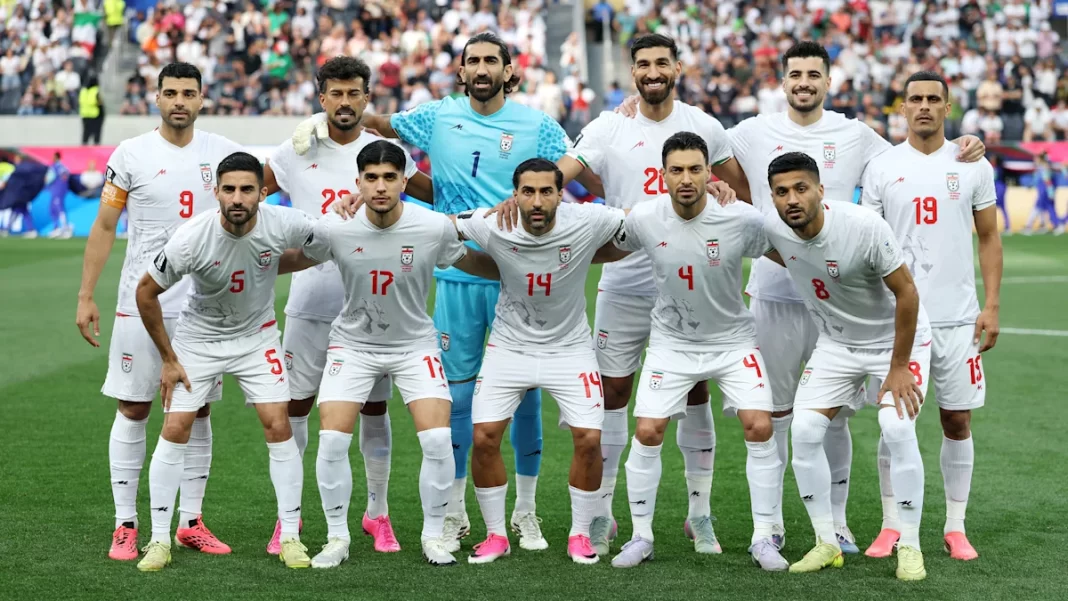

The 2026 FIFA World Cup has been about more than just soccer for Iran’s national team, as political tensions, visa disputes and travel hurdles threaten to overshadow the team’s efforts.
Iran’s World Cup cycle has been in upheaval since the United States and Israel launched strikes on Iran on Feb. 28, triggering a conflict that disrupted the team’s preparations and travel plans. Less than 24 hours before Iran played its first match in the World Cup on Monday, the U.S. and Iran agreed to the framework for a deal to end the conflict.
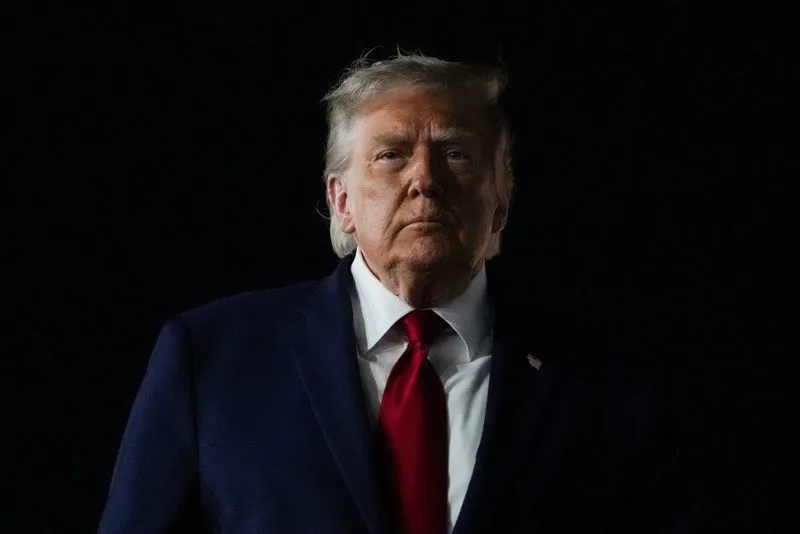
Active hostilities are halted, but President Trump told reporters at a G7 summit in France on Wednesday that fighting would resume if Iran doesn’t “behave.”
Not even a week into the World Cup and drama continues to swirl around the Iranian team. Here’s what’s happened so far.
Iran coach says team was ordered to leave U.S. soon after 1st match

Iran head coach Amir Ghalenoei looks on during a training session on June 16 in Tijuana, Mexico.
(AP Photo/Gregory Bull)
Iran head coach Amir Ghalenoei said his team was ordered to board a plane to Mexico minutes after drawing 2-2 with New Zealand on June 15.
Ghalenoei said they had expected to spend Monday night in California to maximize the normal recovery process after their opening game, only to be told after the match that everyone had to board a plane for the 140-mile trip back to Tijuana immediately.
“They didn’t even give us time to recover,” Ghalenoei said through an interpreter during a press conference after the match. “After the game today, they said to us, ‘You have to leave immediately.’ It’s very important for us to have time to recover, but we were asked to get on a plane and return to our camp in Tijuana, and we are really troubled by that.”
He added that he believes his team is “the most oppressed in the World Cup.”
Prior to the tournament, the Iranian football federation moved the team’s base camp from Arizona to Mexico amid uncertainty over U.S. visas due to the Iran war, Iran’s ambassador to Mexico told Reuters.
The U.S. pushed back against Ghalenoei’s complaints, saying those were the terms all along.
Andrew Giuliani, the executive director of the White House FIFA Task Force, outlined the processes the Iranian team must follow in order to enter the U.S. during an interview Monday night on CBS News.
“The team will be allowed to come in, match day minus one, so the day before the match. They’ll be asked to leave the day that the match wraps up, so the evening of the match. And they’ll be able to do that again in Los Angeles. And they’ll be able to do it again in Seattle,” Giuliani said.
The Department of Homeland Security told Yahoo that “the Iranian National Football Team agreed to these terms.”
Some staff members of the Iranian team were denied U.S. entry
Giuliani also told CBS News that some of the team’s staff and team officials weren’t allowed to enter the U.S.
Giuliani declined to go into detail, but he cited Secretary of State Marco Rubio’s comments about denying entry to people with direct ties to Iran’s Revolutionary Guard. “Secretary Rubio said very clearly: Anybody with direct ties to the IRGC is not coming into the United States of America, and they’re not going to let the World Cup be the reason why they can come in,” he said. “So I think it’s very clear why.”
On Tuesday evening, Iran’s federation said it requested that FIFA follow up on those denied visas.
“Like the other 47 participating teams, the Iranian delegation is expected to have its full operational staff in place, including a team manager, a media officer, and an administrative manager,” the federation said. “Their absence creates obvious challenges for the team’s daily operations and is not consistent with standard tournament procedures.”
A hiccup with an Iranian player’s visa

Iran’s Mehdi Torabi during training on June 16.
(REUTERS / REUTERS)
All of Iran’s players and coaches had received visas, Giuliani confirmed to CBS News. But the entry visa for Iran winger Mehdi Torabi expired after their first game on Monday.
Torabi visited the U.S. Consulate in Tijuana, Mexico, and was able to secure a multiple-entry visa.
“This issue has been resolved,” the U.S. State Department said Tuesday. “As soon as we became aware of the issue, we worked to ensure that the player can participate in every game.”
Iranian fans displayed flags to protest Tehran despite FIFA’s ban on political symbols

A man shouts before the World Cup match between Iran and New Zealand in Inglewood, Calif., on June 15.
(AP Photo/Mark J. Terrill)
Iranians are largely restricted from traveling to the U.S. due to longstanding national security policies. But for its first game on June 15 against New Zealand, the team played in Los Angeles, home to the largest Iranian community outside of Iran, leading to a politically charged atmosphere outside of SoFi Stadium.
Among those in the crowd were Iranian fans cheering on their team. But other fans who view the World Cup team as a proxy for the Iranian government signaled opposition. They protested by holding up prerevolutionary flags featuring the lion-and-sun emblem, which were used before 1979 and are viewed as a symbol of protest against the current Iranian government.
Others showed their opposition by cheering on New Zealand and booing their own side. Despite FIFA’s efforts to restrict flags and apparel it deems political or offensive, fans still passed through stadium security without any issues. Some, however, were confronted by officials during the match. Outside the stadium, several hundred waved anti-Iranian flags and signs, or destroyed the current Iranian flag.
Iran’s next game is in Los Angeles
The Iranian team is set to play its second World Cup match on Sunday, June 21, against Belgium in Los Angeles. After that, it’ll compete against Egypt on Friday, June 26, in Seattle.