
You may be looking for a camera to document your travels, and when you start researching it can become overwhelming because there are dozens of cameras on the market targeting “the traveler”. From sports cams to glasses with cameras to old-fashioned point-and-shoot, the options for what is on the market seem endless. Well, let’s review the newest kid on the block by a brand that has been making portable and pocket cameras not only accessible, but also fun. The new Insta360 Luna Ultra.
Quick Overview


Insta360 Neck Mount with Air – Cushioned Base, Instant Release Mechanism for Hands-Free POV Vlogging X5, X4, X3, X2, ONE X2, Air/ONE, Ace, Ace Pro, Ace Pro 2, GO 3, GO 3S, GO Ultra
Now, if you’ve searched the Insta360 Luna Ultra, you’ve realized that all the reviews are catered toward content creators. This one isn’t. This review is specifically for regular folks who like to document their travels for good old-fashioned reasons. Like, their journals, familial archives, and yearly reflection logs.
Insta360 sent me the full creator kit to test, and after running it through daily use, the case for the Insta360 Luna Ultra for travel has almost nothing to do with growing a following and everything to do with getting better footage of a trip without hauling a second bag of gear to do it.
Why The Insta360 Luna Ultra Is Great for Travelers
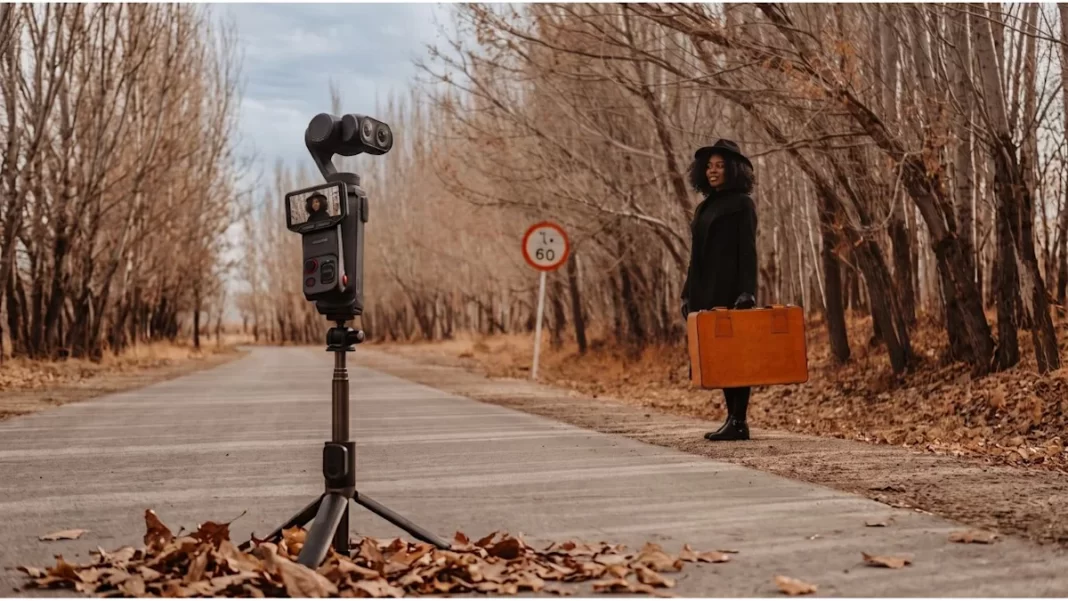
The feature that changed how I shoot is the detachable touchscreen. That’s probably the most viral thing about this camera, and honestly, the reason why I wanted to get my hands on it. Pull it off the body and you can monitor and control the camera wirelessly from a distance, up to about 20 meters under good conditions, according to Insta360’s specs. In travel footage, you often want what I’d call a big world, little you moment: something that places you in the frame for context without making you the whole story. Most cameras force you to choose between holding the thing yourself, which flattens that shot, or asking a stranger to film you, which is its own gamble. The detachable screen splits the difference. You set the camera, walk into the scene, and the destination still does the talking. But, even beyond a solo travel moment, think about how this could work if you want a shot of you and the family in front of the waterfall or at the family reunion. No more setting the frame, then running into it on a timer. No more guessing and hoping you got something that didn’t cut off your head or arm. Take the screen with you, set up the composition when you are where you want to be, then snap away accordingly.
The camera is also heavier than I expected, and I mean that as a compliment. It doesn’t feel like a toy in hand. The build quality reads as sturdy rather than delicate. Additionally, even though you’ll see many pros drooling over this camera, its features and capabilities, a key point for my recommendation is that it is great for beginners. Just turn it on and shoot. To get your content off the camera, forget about having to haul it to your desktop and transfer via the SD card. You can certainly do that, but the Insta360 app functions as a real one-stop shop for editing and sharing. Simply connect via the camera’s Wi-Fi and it reads what you’ve captured right there!
For deeper dives and to learn the advanced features, there’s no shortage of outside tutorials from working filmmakers. They go into every nuanced detail this camera has to offer, from color profiles to manual settings. That range, usable on day one, makes the Insta360 Luna Ultra capable of more once you want it.
Now, this camera also has some pain points. As a brand-new product, early testers have encountered some glitches and hang-ups while testing. But, Insta360 has been ready for this real-world feedback and has been pushing firmware updates to smooth out early rough edges. I’m also not that big of a fan of the fold-out metal legs built into the accessory handles. When pulled out, the camera doesn’t seem like it’s particularly more steady, and I found myself reaching for the small screw-in tripod from my DJI Osmo Pocket instead. Also, the Mic Pro transmitter’s pairing process is oddly manual. You have to pair more often than expected rather than the camera simply recognizing its own microphone system the way DJI’s does. It makes sense to have to repair the mics if you’re using it on another device, but it was quite annoying and something took a little while for the mic and camera to connect, which is why I bring this up. It should be smarter about knowing when it’s talking to its own hardware.

Insta360
A dual-lens 8K gimbal camera with a detachable touchscreen and automatic subject tracking. Built for travelers who want better trip footage than a phone captures, without the learning curve of a full production camera.
The DJI Controversy
Being the newest kid on the block (in this particular space) hasn’t gone unnoticed by the company that’s owned this shelf space for years. DJI has effectively controlled the pocket gimbal camera category since it introduced the original Osmo Pocket in 2018, which I’ve had every version of since the initial rollout. It’s a fantastic camera. The Luna Ultra is Insta360’s first real swing at that same territory. DJI responded like it noticed.
The day after the Luna Ultra launched, DJI filed two patent lawsuits against Insta360’s parent company in federal court in Texas. One alleged that the Luna Pro and Ultra’s design infringes on two of DJI’s design patents for the Osmo Pocket line, and the other claimed four separate violations tied to the cameras’ tracking and control functions. DJI was seeking a permanent injunction that would have pulled the Luna Ultra from the U.S. market entirely. Insta360 countersued within two days, asserting five of its own utility patents covering gimbal stabilization and tracking technology that it says DJI’s product lines rely on.
Both companies pointed fingers publicly. Insta360 founder JK Liu said the Luna Ultra was “the result of years of independent R&D, not a response to any competitor’s product,” and framed the timing of DJI’s suit as an attempt to disrupt the launch. DJI’s filings leaned on the Osmo Pocket’s history in the category, arguing Insta360 had copied specific design elements down to the control layout.
Worth noting, there had been other consumer knock-off models to DJI’s famed pocket camera. But, these were all released by ancillary Chinese replica companies. Insta360 is a major player and direct competitor to DJI.
The lawsuits, however, didn’t stay in the U.S. for long. Both companies voluntarily dismissed all four lawsuits on June 28, without a public settlement. But DJI wasn’t done: it has since filed new patent suits against the Luna series in multiple Chinese courts, and the case in Shenzhen is reportedly headed to trial on August 3, 2026.

Insta360 Luna Ultra has True-to-Life Portraits: Recognizes faces and optimizes skin smoothness and tone.
(Insta360)Why The Luna Ultra Is Winning the Reviews
Strip away the lawsuit, and the reviews that have come out since the June launch are unusually consistent on one point: the image quality surprised people who went in skeptical of a company known mostly for 360-degree cameras and action cams.
Some are calling it the best vlogging camera, pointing to image quality that beats what a smartphone can produce as reason enough to carry it daily. Others are praising the tracking system, Deep Track 5.0, as among the most reliable on the market, and clocking a strong battery result: over 110 minutes of continuous 8K recording before a low-battery warning, with fast charging to roughly 80 percent in about 23 minutes.
Not every review is praise, though. ProVideo Coalition’s reviewer said the camera is the best pocket gimbal currently available in the U.S., but hamstrung by some questionable firmware decisions that he hoped Insta360 would fix, which lines up with the early firmware bumps I ran into myself. Stuff also flagged a broken panorama mode and a manual gimbal control that felt jerky. None of that reads as disqualifying so much as first-generation growing pains, the kind that tend to get patched rather than redesigned.
Best for: Someone who wants their trip footage to hold up better in a family archive or a yearly recap than a phone allows, without carrying a separate full-frame camera.
Not the right fit: Anyone who already owns a recent single-lens pocket gimbal and rarely wishes they had more reach. The telephoto lens and the price premium it buys are the whole argument for upgrading, so if that doesn’t matter to you, it’s a hard sell. Filmmakers who need a waveform monitor or precise manual exposure tools while shooting in log will also hit real limits here; that control isn’t built in yet.
Alternatives: DJI’s Osmo Pocket 4 remains the direct, better-established competitor, and it undercuts the Luna Ultra on entry price, though it still has a single lens rather than two. The DJI Osmo Pocket 4 Pro (also referred to as the Pocket 4P) is a dual-lens pocket gimbal camera featuring a 1-inch LOFIC wide-angle sensor with 17 stops of dynamic range and a 60mm mid-telephoto portrait lens, the direct comparable model to the Luna Ultra.
The Accessories Are…A Lot
Insta360 sent the full accessory line with the kit. I’ve ranked them below for the general traveler, for someone documenting a trip, not as someone producing content from it.
Mini Fill Light. A small magnetic light that clips on and repositions easily, with adjustable color temperature and brightness and a battery rated for up to about six hours of use. This is the one accessory here that solves a problem most casual travelers actually run into: dim restaurants, evening markets, hotel rooms after dark. Worth packing if you do any evening shooting at all.
Cross Body Strap. An adjustable strap with quick-release clips built specifically for the Luna Ultra. It’s a practical carry solution. It even comes with an attachment for you to use for your cellphone. So it’s a multi-purpose, multi-use solution.
Sliding Protective Case. A slim case that powers the camera on with a single downward slide and protects it in your bag when slid back up. I find the regular case protector fine. But for those looking for a slimmer, simpler option, this one is affordable and worth having.
Black Mist Filter. A magnetic filter that softens highlights for a diffused, cinematic look. It’s meant to soften the image to a more appealing look for viewers. Not essential, but a nice touch to elevate your footage.
Neck Mount. Lets you shoot hands-free by wearing the camera around your neck, either on its own or paired with the POV Head Tracker below. Useful for walking footage of a market or a trail without holding the camera the whole time. (I think it’s silly looking. But, my mom loves it for her gardening.) It can also be used with other Insta360 cameras.
Insta360 Neck Mount with Air – Cushioned Base, Instant Release Mechanism for Hands-Free POV Vlogging X5, X4, X3, X2, ONE X2, Air/ONE, Ace, Ace Pro, Ace Pro 2, GO 3, GO 3S, GO Ultra
POV Head Tracker. Mounts to your ear, glasses, or a helmet and lets the camera follow your head movement for true first-person footage. It’s a fun, well-built accessory, but it asks more of you in setup and mounting than someone documenting a trip for their own archive is likely to want. I find it hard to convince anyone they really need this, especially the casual traveler. It may be better suited to someone shooting for an audience than someone shooting for themselves.
ND Filter Kit. A set of neutral density filters for controlling exposure and getting natural motion blur in bright daylight. This is a filmmaker’s tool. If you’re shooting handheld clips to remember a trip by, you likely won’t miss it. But, just in case, think of ND filters as sunglasses for your camera. There’s a bit of a learning curve for these, but these filters could be helpful down the line should you want to produce cinematic videos.

The Smart Camera Worth Investing In
Go back to that overwhelming shelf of sports cams, glasses cameras, and point-and-shoots, and the Luna Ultra doesn’t win by being the most powerful option on it. It wins by being the one that asks the least of you while still giving you a shot worth keeping, the kind that ends up in a journal or a family archive rather than a feed. DJI built the category. Insta360 just made a serious case that it doesn’t have to be the only one making the camera for it.