
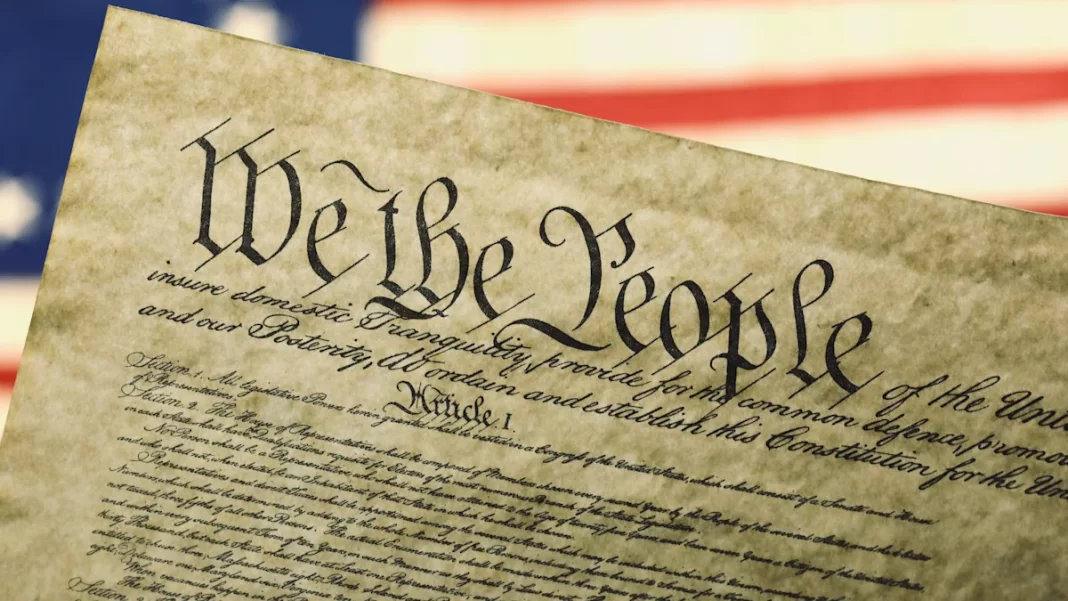

Many things have changed in the 250 years since the United States was founded, but one thing that hasn’t changed that much is our Constitution. In the 238 years since it was ratified, Congress has seen nearly 12,000 proposed amendments, according to the Senate’s records. Most never made it far.
While Congress and the states have the power to change the Constitution through the amendment process, it rarely happens. An amendment must be proposed by two-thirds of the House and Senate, or a constitutional convention must be called by two-thirds of the state legislatures. For the amendment to be approved, three-quarters of the states must ratify it.
There’s a high bar to amend the Constitution — only 27 amendments have been ratified, starting with the Bill of Rights. The most recent, ratified in 1992, bars Congress from giving itself an immediate pay raise.
Below are some of the proposed constitutional amendments that, if they had been adopted, would have changed how our country operates today, along with a few common myths about our Founding Fathers to help spark conversation at your July 4 gathering.
The United States of… the Earth?
In 1893, first-term U.S. House Rep. Lucas Miller of Wisconsin introduced a total of 46 bills in just one day. One proposal was to change the country’s name from the United States of America to the “United States of the Earth.”
Miller’s reasoning was that “it is possible for the republic to grow through the admission of new states into the union, until every nation on earth has become part of it.” The congressman’s proposal was widely ridiculed, with the press calling him a “crank,” and he failed to win renomination for a second term.
A 3-person council to lead the nation
With the nation on the brink of the Civil War in 1860, Rep. John William Noell of Missouri proposed abolishing the presidency and replacing it with a three-person executive council. Those three members would be elected by separate regions of the country, and each member would have veto power over the other two.
Proposals to abolish the presidency continued after the Civil War as well. In 1878, Rep. Milton Isaiah Southard of Ohio introduced a proposal similar to Noell’s three-person council. There would be one president for each of three regions: the Western states, the Southern states and the combined Eastern and Middle states.
His argument was that “the people of this country are opposed to monarchy, or the ‘one-man power’ created by the accumulation of regal power in the hands of one person in the control and direction of their public affairs.”
A personal wealth cap
In 1933, one of the bleakest years of the Great Depression, Rep. Wesley Lloyd of Washington, proposed that Congress be given the authority to place a limit on Americans’ personal wealth, setting the limit at $1 million — worth over $25 million today.
“The only reason there is a widespread poverty,” Lloyd told Congress, “is that wealth and the ownership of wealth has become centralized — the only reason many men are too poor is because a few men are too rich.”
No more Electoral College
Americans vote for the U.S. president not by direct popular vote, but through the Electoral College. On Election Day, voters cast ballots in each state. Those votes determine which electors represent each state in the Electoral College, which then formally elects the U.S. president.
There have been many attempts to abolish this voting system since its inception in 1787, mostly because the Electoral College winner does not always win the popular vote. That means a presidential candidate could win the popular vote but lose the overall election. This most recently happened in 2016, when Donald Trump defeated Hillary Clinton in the Electoral College but Clinton won the popular vote by nearly 3 million.
One amendment to abolish the Electoral College and replace it with direct elections came close in 1969. It passed in the House by a 338 to 70 vote, but it died in the Senate.
One of the most recent attempts to abolish the Electoral College came in December 2024, when Rep. Steve Cohen of Tennessee reintroduced an amendment, arguing that “Americans expect and deserve to see the winner of the national popular vote for any elected office assume the office as its legitimate winner.”
Allowing Americans to vote on wars
Congress holds the power to declare war. A year before the United States entered World War I, California Rep. Denver Samuel Church proposed an amendment that would have required declarations of war to be approved by voters. Church’s proposal included exceptions, such as an invasion of the U.S. by a foreign country.
Facts about the Founding Fathers… that aren’t actually true
If you’re headed to a gathering or barbecue for the Fourth of July and are looking for an icebreaker, here are some interesting myths about America’s Founding Fathers that have been debunked.
George Washington didn’t have wooden teeth. Over the years, his dentures were made of metal, animal bones and other people’s teeth — but never wood.
Benjamin Franklin didn’t seriously propose the turkey as our national symbol. The myth comes from a letter he wrote to his daughter, dissing the bald eagle as a “bird of bad moral character” compared to “a much more respectable bird” like the noble turkey.
Paul Revere wasn’t technically a Founding Father — and he didn’t take his midnight ride alone. The legend of a lone hero riding through the night to warn citizens of the coming British army makes for a good story, but in reality, there was another dude there, and a whole bunch of other people spreading the word through other means.
John Hancock didn’t sign the Declaration of Independence on July 4, 1776. Nobody did. Hancock’s name did appear on a printed copy distributed to the public in July of that year, but Founding Fathers didn’t actually sign the document until August.