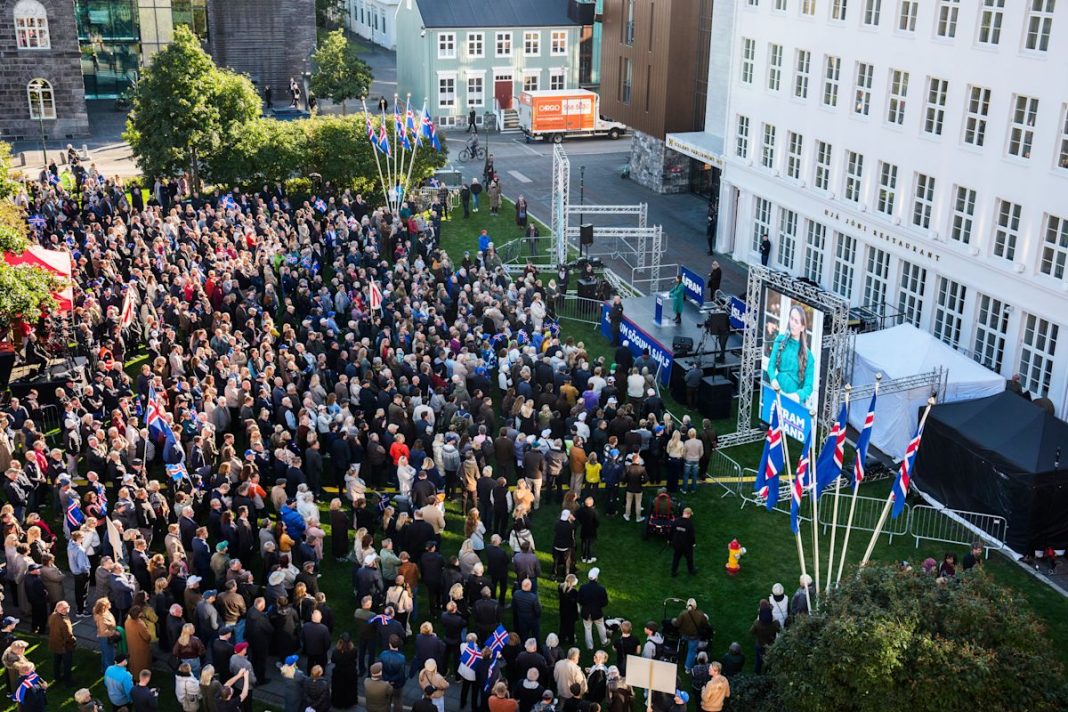

REYKJAVIK, Iceland (AP) — Voters in Iceland are heading to the polls Saturday to decide whether the country should resume long-stalled negotiations on becoming a member of the European Union, and they are doing so in the shadow of U.S. President Donald Trump’s threats to control nearby Greenland.
The yes-or-no referendum question is simple enough for the 265,000 or so eligible voters: Should Iceland resume accession negotiations with the European Union?
If voters reject the proposal, that’s it, for a generation at least.
A yes vote would trigger the start of a negotiating process with the EU’s executive branch, the European Commission, that will involve discussions on 35 areas, from the economy to human rights. Perhaps, most importantly for Iceland, its fishing stocks in the rich North Atlantic waters will be up for discussion, and not everyone is happy about that. But some also believe the European Union could offer protections if Trump were to ever make similar threats on Iceland.
Nearby Greenland casting a shadow over referendum
When Trump talked about U.S. control of Greenland, particularly at the start of this year, he altered the mood in Iceland, which is just 180 miles (290 km) away from the self-governing territory of Denmark, a longtime U.S. ally.
Though Trump has indicated he won’t use force to seize Greenland, his interest doesn’t appear to have cooled.
The underlying worry among many in Iceland is clear — if Greenland is seized, is Iceland next?
The ensuing question is clear too — if yes, does EU membership provide a bulwark against any new Trump ambition in the North Atlantic?
Iceland’s left-leaning coalition government, elected in 2024, certainly thinks so and that’s largely why it moved forward the EU referendum that it had planned for next year.
“We can’t really trust the U.S. anymore,” said Hildur Knútsdóttir, a horror fiction writer who plans to vote in favor of EU membership.
After more than a decade, EU membership is back on the agenda
EU talk is nothing new in Iceland, which formally ended its previous effort to join the bloc in 2015, largely over concerns of what membership would mean for its rich fish resources.
The hefty cod and haddock catches from the chilled Arctic waters around Iceland are central to the national identity too. The descendants of Vikings who settled Iceland have been living off the sea for centuries.
With much of the country’s economy geared toward its lucrative and well-managed fishing industry, fishing rights have been a talking point in the run-up to the referendum.
Joining the 27-nation EU would require Iceland joining the bloc’s common fisheries policy that would allow Spanish, Dutch and other trawlers into their waters. The government has indicated it would look for a special arrangement, potentially a full opt-out from the policy.
In the final days ahead of the vote, Iceland’s prime minister, Kristrún Frostadóttir, has sought to remind voters that the referendum is not the end of the matter, and that there will be another referendum if and when a membership agreement with the EU has been reached.
“This is not an election about membership and not about adaptation, as there will be another referendum on an accession agreement if the result is yes,” Frostadóttir told a rally.
Fish is not just an economic matter, it’s part of the national identity
For many, Iceland’s national identity and ultimately its culture is on the ballot too.
Iceland, which gained independence from Denmark in 1944, has a proud history of independence, of not allowing itself to be pushed around by bigger and richer European nations. It even fought — and won — the so-called Cod Wars with Britain in the 1970s over its fishing grounds.
Backers of EU membership say it’s best for Iceland to get closer to its European neighbors to combat issues that don’t respect borders, such as climate change.
Iceland is already in the EU’s frictionless single market and the Schengen free-travel zone.
Opponents say the current setup is just right and that Iceland already enjoys all the benefits of European integration without the sovereignty compromises that inevitably will come from being a full member.
“I think Iceland is better off outside of the EU, within the close collaboration with the EU,” former prime minister, Katrín Jakobsdóttir, told The Associated Press.
____
Pylas contributed from London.