
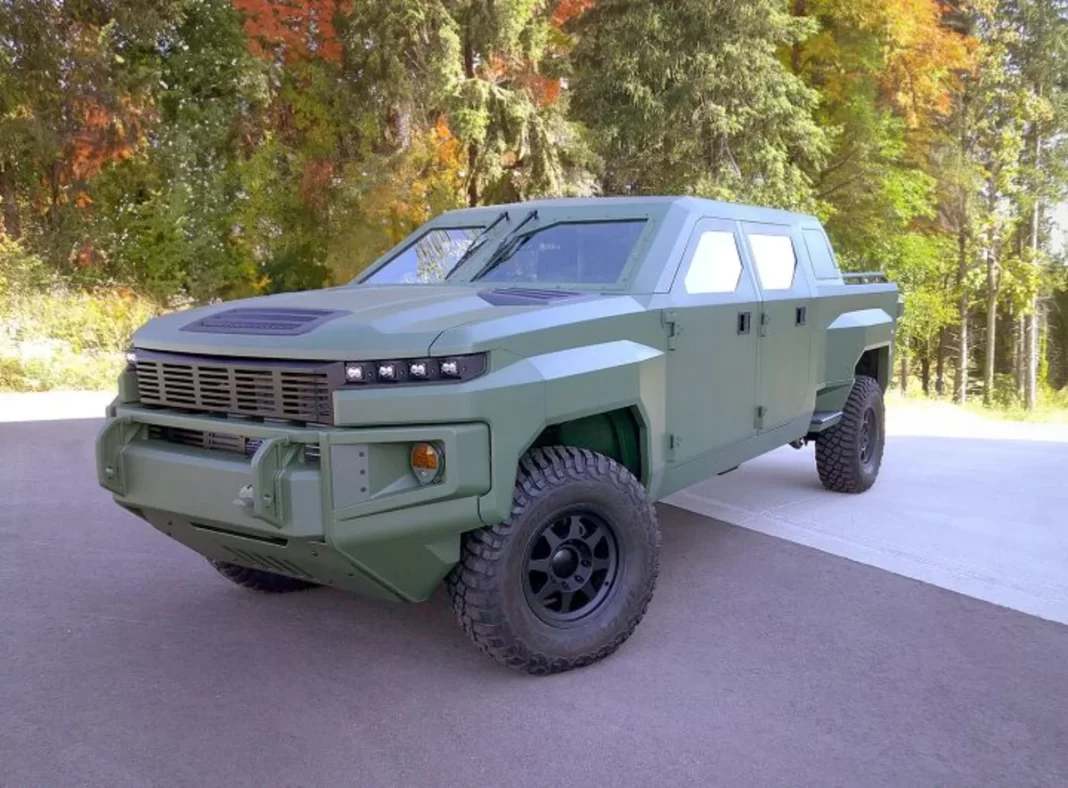


The long-standing rivalry between Detroit’s biggest automakers is expanding onto the military battlefield. Ford Motor Company has officially entered the race to supply the U.S. Army with its next-generation light tactical vehicle fleet, securing a new contract with the Department of Defense to develop functional field prototypes.
The move sets up a high-stakes showdown against crosstown rival General Motors. The Pentagon is actively pushing to modernize its military transport networks by utilizing robust, mass-produced civilian automotive architectures, giving it direct access to stable, domestic supply chains and established vehicle platforms.
The military’s new tactical transport initiative targets a production run of roughly 600 heavy-duty vehicles. Rather than commissioning a costly, ground-up design from traditional defense aerospace firms, the U.S. Army has selected three distinct builders to submit functional prototypes for rigorous evaluation: Ford Motor Company, GM Defense LLC, and Utah-based specialized tactical builder BC Customs.
The vehicle requirements are steep: it must be capable of carrying full infantry squads across harsh, unpaved war zones while functioning as a mobile microgrid. The vehicles are required to act as rolling power banks capable of charging aerial surveillance drones, running high-draw communications equipment, and operating electronic warfare modules directly from the truck’s internal power supply.
Ford’s entry marks a significant return to defense manufacturing. The automaker will manufacture three operational prototypes built directly on the platform bones of its commercial F-Series Super Duty heavy-duty pickup trucks. Ford states that adapting mass-produced frames, heavy-duty axles, and established powertrains drastically shortens engineering lead times and cuts long-term fleet acquisition costs.
While Ford’s contract highlights a bold re-entry into military logistics, the Blue Oval faces a massive competitive hurdle in GM Defense. General Motors established its specialized defense branch years ago and has already carved out an impressive footprint within active army procurement.
GM Defense is currently fulfilling a major multi-year contract supplying the U.S. Army with its midsize, Chevrolet Colorado-based Infantry Squad Vehicle (ISV), with more than 1,000 units already actively deployed. For this larger heavy-duty contract, GM has a significant head start. The company has spent the past two years designing and field-testing a larger variant dubbed the “ISV-Heavy,” which is built on the architecture of the Chevrolet Silverado HD. The Pentagon has already purchased early test versions of GM’s V8-powered tactical truck and is currently subjecting them to extreme multi-environment field trials.