

Before I reached Arches National Park, I understood why Hollywood has spent decades filming around Moab.
The road into town winds past towering red sandstone cliffs, the Colorado River snakes through the desert below and nearly every bend looks like it belongs in a movie. Classics like Thelma & Louise and Indiana Jones and the Last Crusade filmed here, and countless Westerns have relied on the same dramatic backdrop. The landscape doesn’t need special effects. It already looks larger than life.
Like many first-time visitors, I originally planned my trip around the national parks. But after spending several days at Sorrel River Ranch, a luxury working ranch tucked between Arches and Canyonlands national parks, I realized the hotel wasn’t simply where I slept each night. It became one of the highlights of the trip.
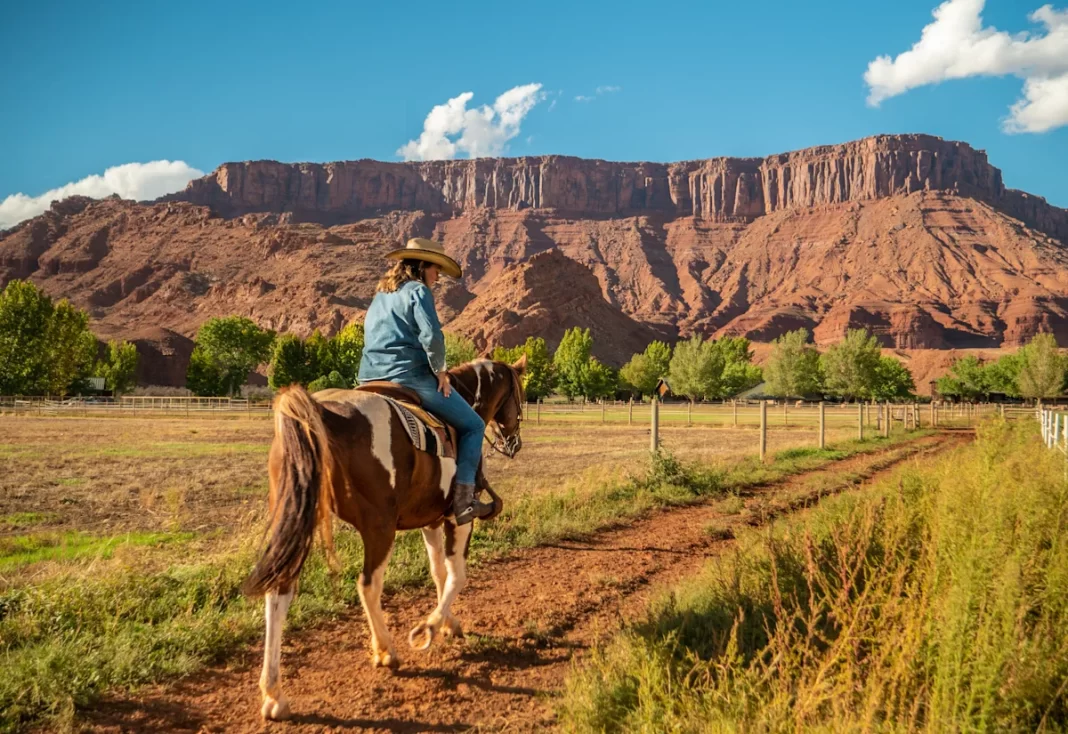
Instead of racing from one overlook to another, I found myself slowing down. I spent mornings exploring Utah’s famous red-rock parks, afternoons riding horses across desert mesas and evenings watching the cliffs glow orange from the banks of the Colorado River.
Why Sorrel River Ranch is one of the best places to stay in Moab

Private cabins at Sorrel River Ranch sit beneath towering red-rock cliffs along the Colorado River near Moab, Utah.
(Sorrel River Ranch)Choosing where to stay in Moab matters more than I expected. Downtown Moab puts you close to restaurants, outfitters and the entrance to Arches National Park, but it can also feel busy, especially during peak travel seasons.
Sorrel River Ranch offers a completely different experience. Set on 240 acres along the Colorado River about 17 miles northeast of downtown, the property feels wonderfully secluded without being inconvenient.
One of the unexpected highlights of staying here begins before you even check in. If you’re driving from Interstate 70, take Utah Scenic Byway 128 instead of the faster route. The road follows the Colorado River beneath soaring red-rock cliffs, passes Fisher Towers and offers one jaw-dropping view after another. By the time I pulled into Sorrel River Ranch, I already felt like my Moab vacation had started.
Arches National Park, Canyonlands National Park, Dead Horse Point State Park and several of Utah’s most scenic drives are all within easy reach. If you’re planning a longer Southwest road trip, it’s also an easy stop before or after visiting the Grand Canyon’s North Rim, which I found to be a quieter alternative to the South Rim.
The ranch dates to the early 1900s and takes its name from the rust-colored landscape surrounding it. Today, it combines the feel of a luxury resort with the character of a working ranch, offering 56 private cabins, horseback riding, a full-service spa, an organic garden, riverside walking paths and wide-open views in every direction.
The resort is very dog-friendly, and I stayed in one of the river-facing cabins with my dog, Poppy, and her canine best friend, Indigo, and that ended up being one of the biggest advantages of choosing the property.
Moab is an incredibly dog-friendly town, but the national parks themselves are much more restrictive. Pets are welcome in developed areas but aren’t allowed on most hiking trails inside Arches or Canyonlands.
Having a spacious cabin, plenty of room to walk along the river and a resort that genuinely welcomed dogs made planning each day much easier. Instead of worrying about rushing back to a cramped hotel room, I actually looked forward to returning to the ranch each afternoon.
What to do near Sorrel River Ranch

Delicate Arch is the most famous landmark in Arches National Park, one of the highlights of any trip to Moab.
(Shutterstock.com)One of the things I appreciated most about staying here was how easy it was to experience several very different sides of Moab.
Arches National Park is the obvious starting point. Home to more than 2,000 natural stone arches, it’s where you’ll find iconic landmarks like Delicate Arch, Balanced Rock and Park Avenue. Even if you’ve seen the photos, the scale of the landscape is difficult to appreciate until you’re standing beneath it.
Canyonlands offers an entirely different experience.
Where Arches is all sculpted sandstone and famous rock formations, Canyonlands feels vast and untamed. The overlooks stretch across an enormous maze of canyons carved by the Colorado and Green rivers, and it’s surprisingly easy to find yourself standing alone, staring out across miles of desert.
If you’re already heading toward Canyonlands, Dead Horse Point State Park deserves a stop as well. The dramatic overlook is one of the most photographed viewpoints in Utah, and film fans may recognize it from the famous ending of Thelma & Louise.
Fisher Towers was another highlight. Rising dramatically above the desert floor, the towering red sandstone formations attract climbers from around the world, but you don’t have to climb them to appreciate the scenery. Simply driving through the area is worth the detour.
My favorite ranch experience was horseback riding to ancient petroglyphs
If I had to choose one on-property experience that best captured the spirit of the area, it would be the horseback ride offered through Sorrel River Ranch.
Our small group climbed gradually toward a red-rock mesa while the Colorado River wound through the valley below. The horses moved at an easy pace, giving us plenty of time to take in the landscape instead of concentrating on difficult riding.
About halfway through the ride, we stopped beside a cliff covered in ancient petroglyphs.
Seeing artwork left behind centuries ago made the experience feel connected to the long human history of this landscape rather than simply another outdoor activity. Standing there, looking across the same red-rock scenery people have been traveling through for generations, gave the ride an entirely different perspective.
The guides also made a huge difference. They clearly knew both the horses and the landscape inside and out, sharing stories about the area while making everyone—from experienced riders to complete beginners—feel comfortable.
Horseback riding may have been my favorite experience, but it’s far from the only way to explore the landscape. Sorrel River Ranch also offers guided UTV adventures that wind through sandstone canyons, river crossings and high-desert viewpoints, along with mountain biking, guided hikes and excursions into Arches and Canyonlands national parks.
Guests looking for a little less adrenaline can book a spa treatment, stroll through the organic garden or simply spend the afternoon by the pool before gathering around the nightly campfire for complimentary s’mores.
The River Grill is worth planning dinner around

Guests can dine beside the Colorado River at River Grill, the signature restaurant at Sorrel River Ranch near Moab, Utah.
(Sorrel River Ranch)After spending the day exploring the parks, I found myself looking forward to evenings almost as much as the adventures.
The River Grill sits beside the Colorado River with sweeping views of the surrounding cliffs, and sunset transforms the entire landscape.
As the light softens, the red sandstone shifts through shades of orange, crimson and deep purple while the river reflects the changing colors below. It’s one of those places where conversation naturally pauses because everyone at the table is watching the view.
The food reflects the setting.
Many ingredients come directly from Sorrel River Ranch’s on-site organic garden, and the property incorporates sustainability throughout its operations, including regenerative agricultural practices and livestock care.
It’s a thoughtful connection to the surrounding landscape rather than simply another hotel restaurant.
When is the best time to visit Moab?
Moab is a year-round destination, but not every season offers the same experience.
Summer brings long days but also intense desert heat that can make midday hiking uncomfortable, particularly inside Arches National Park where shade is limited.
I visited in May and found it nearly ideal.
Wildflowers were beginning to bloom, daytime temperatures were comfortable for hiking and horseback riding, and evenings were cool enough to enjoy dinner outdoors.
Fall is equally appealing, with warm days, crisp mornings and spectacular light for photography. It’s also one of the busiest seasons, so booking accommodations and national park reservations well in advance is a good idea.
Winter offers fewer crowds and a completely different perspective on the red-rock landscape, while spring and fall remain the sweet spots for visitors hoping to spend long days outside.