
Here in Ohio, we have been mired in an ongoing energy affordability crisis — and for too many families, relief feels nowhere in sight.
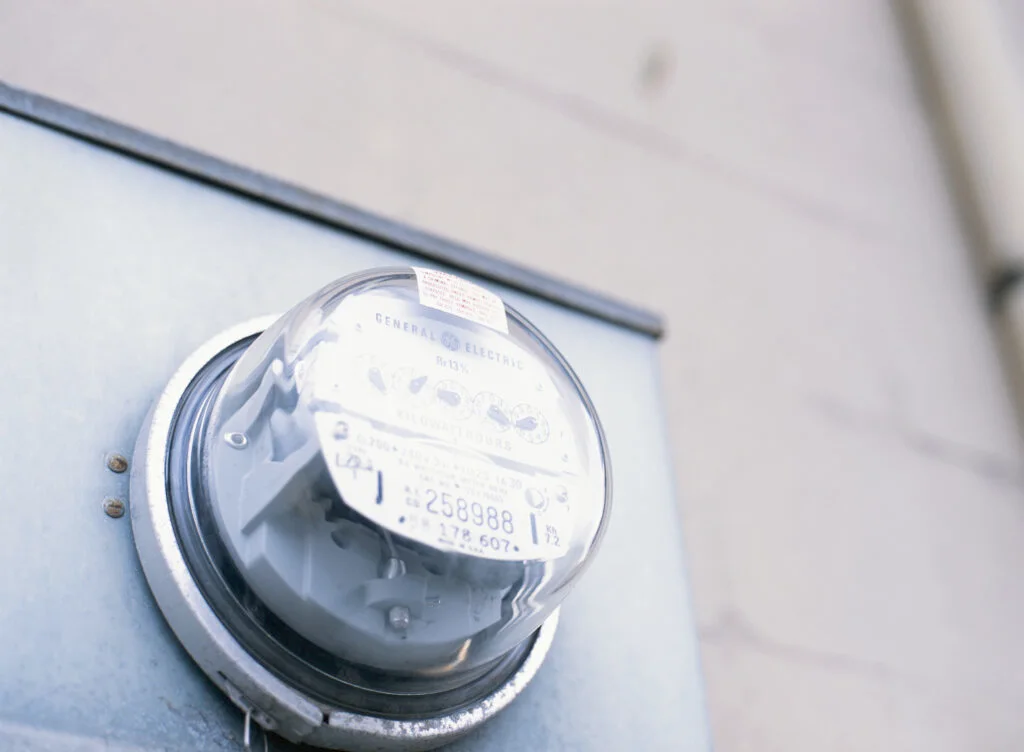
Over the past decade, electric bills have climbed steadily across the state, but recently the pace has accelerated. In the last year alone, some Ohioans have seen their monthly bills jump as much as 44%.
Families are being forced to choose between paying their utilities, rent, or putting food on the table for their children.
This represents a new normal, as nearly one-third of American households struggle to pay their energy bills today.
Among Ohio families already receiving energy assistance, they spent an average of 22.4% of their income on energy costs, the second-highest burden rate in the nation.
The question is no longer whether this crisis is real — it’s whether our governor, our General Assembly, and our utility regulators have the will to confront it.
To date, the answer from Ohio’s utilities and state regulators has been resounding silence, punctuated only by the procedural approval of the next rate hike.
In AEP’s recent rate case, the Public Utilities Commission of Ohio had the audacity to declare that arguments concerning an ongoing affordability crisis are “misleading” — saying it is an irrelevant point to raise since everything is getting more expensive.
This is an unhelpful response and a dose of whataboutism that blatantly disregards the lived reality of Ohioans.
SUPPORT: YOU MAKE OUR WORK POSSIBLE
As continues to be the case in Ohio, where we lack state leadership on these issues, local governments are stepping up.
The City of Dayton recently approved what will be one of the largest community choice solar projects ever built inside a U.S. city limit.
The Gem City Solar Project in Northwest Dayton will power roughly 14,665 homes and cover about 30% of the city’s electric aggregation load.
It will lock in 30% of the city’s energy at a fixed price for 25 years — delivering an estimated $42 million in savings for customers already enrolled in a community choice aggregation program that has saved residents over $11 million on energy bills.
Similar local government-led projects are underway in Cincinnati, Cuyahoga County, Fairfield, and Lima that would lock in lower utility prices and municipal costs and ultimately deliver millions in savings over their respective lifespans.
As Ohioans are squeezed by rate increases they cannot stop, communities are pushing forward on projects that give residents their power back.
The leadership shown by these communities stands in stark contrast to compounding institutional failures at the state-level.
The Public Utilities Commission of Ohio — entrusted with protecting ratepayers — has routinely rubber-stamped rate increases with very little customer benefits rather than safeguarding residents.
Utilities preserve their “reasonable” rate-of-return to benefit their shareholders and CEO pay, while residents foot the bill for unreasonable utility bills.
The failure runs deeper than PUCO alone, as Ohio’s state legislature has been equally absent.
There have been no pushes to cap rates or any political will to expand access to clean affordable energy or energy efficiency programs or deliver meaningful relief to those who need it most.
Worse, while families struggle under Ohio’s reliance on volatile fossil fuel markets, the Statehouse has spent years building barriers to Ohio energy projects that would reduce that dependence.
In 2021, the legislature passed Ohio Senate Bill 52, creating government red tape and barriers to build energy projects that would reduce our bills — a law that applies to wind and solar but not fossil fuels.
To boot, Ohio has aggressively pursued data centers — some of the most energy-intensive facilities — with no plan in place for them to significantly contribute to clean energy investment or grid costs.
Ultimately, every solar project, energy efficiency upgrade, or grid modernization project not built is a missed opportunity for local tax revenue and jobs — and represents a ratepayer paying more than they should.
Ohio’s regulators and our legislature have not just lost the plot — they have chosen whose side they are on.
Local governments are realizing that they have more power over their energy future than they may realize, and that there are better options.
Many local projects and programs aimed at addressing energy affordability don’t require permission from the Statehouse or a favorable ruling from PUCO — they simply require local leaders willing to act.
And right now, it’s the only level of government trying to solve these real problems we are all facing.
SUBSCRIBE: GET THE MORNING HEADLINES DELIVERED TO YOUR INBOX.