
default
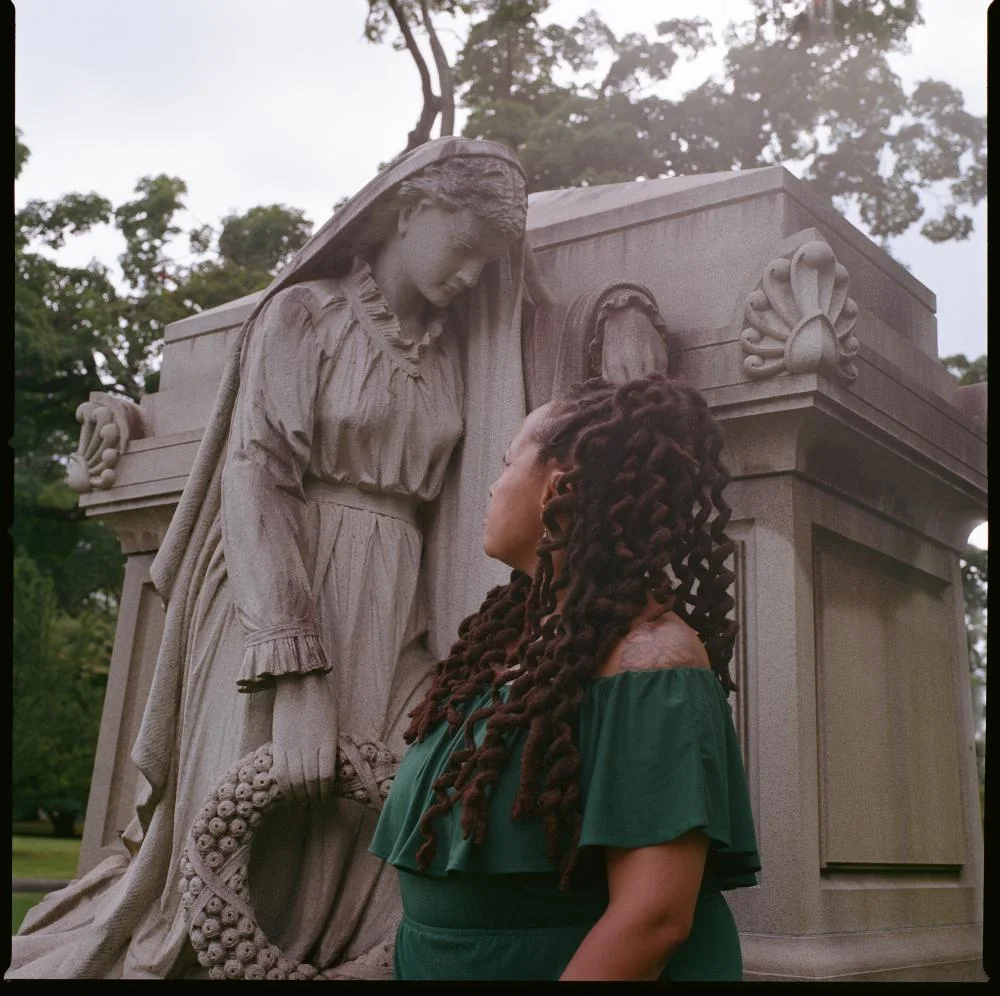
In a small cream-colored room at a cemetery in Philadelphia, Pennsylvania, Nefertiti Moor sat at the head of a semicircle. Dressed in black with her long hair in locs, she delivered instructions for the evening discussion. “It’s not death counseling or a debate,” said Moor. She invited the two women in attendance to talk freely about their cultural associations with dying and grief. Tasha Johnson, who worked in behavioral health, said that she felt desensitized after the recent deaths of several people she knew. She was grappling with “the reality that it can be anyone at any point”.
The free-flowing conversation about mortality, otherwise known as a death salon or death cafe, was unique in that it was designed for people of color. Death salons for marginalized communities are becoming more common around the country, with practitioners addressing the unique end-of-life concerns of queer, trans, or Black and brown people. Acting on a lifelong interest in how communities process grief, Moor became a death doula, a non-medical professional who provides emotional and practical support to people who are dying and to their loved ones.
Sometimes she sits vigil with people as they’re dying, or helps them process their fears and regrets. The profession doesn’t require certification, though many doulas receive training from established programs. As a Black woman, Moor mostly works with Black and brown people because she understands the cultural stigmas around planning for death. In the African American community, Moor said at the death salon, conversations about death are sometimes believed to summon it.
Interactive Left: Raindrops on a window at the Laurel Hill Cemetery. Right: A participant designing a commemorative art piece.
“I see cultural norms where death isn’t openly discussed until there’s a crisis, and that can leave families scrambling to make decisions during some of the hardest parts of their lives,” Moor, 39, said. “I often see financial barriers when it comes to funeral planning or end-of-life prep. I see mistrust of the healthcare systems.” She informs families about cheaper and more environmentally-friendly alternatives to traditional funerals such as green burials, where bodies aren’t embalmed and are buried in shrouds instead of hardwood caskets.
LGBTQ+ death salons offer participants specialized support that acknowledges sexual orientation and gender diversity. Trans people face disproportionately higher rates of violent deaths, which queer death doula Kyra Overmier said: “informs the way that they walk through life”. She hosted a queer death salon at Laurel Hill cemetery in March. Overmier’s trans and queer clients sometimes express concern about being misgendered or referred to as their former name in their death. Gay couples who were ostracized from their families worry that they will feel even more alone if their partner dies.
Specialized death services help people process their grief with others who relate to them. “We deserve to be seen,” Moor said. “Death isn’t just a medical or a legal event. It’s cultural, spiritual or familial. It’s human. The way someone wants to be cared for at the end of life is deeply connected to who they are, where they come from and what they believe in.”
‘The OG work’
Death always fascinated Moor, who from a young age viewed it as another journey in the human experience. When she was nine, her favorite uncle died by suicide, and she recalls the sense of shame permeated throughout the family. “It was very clear that a lot of adults in my life really didn’t know how to package it or talk to me about it,” Moor said. “Very early on I realized there was this fear, avoidance and silence when it comes to death.” It inspired Moor to become a mortician, but she stopped pursuing her degree after her grandfather died and she fell into a depression.
Her childhood interest was renewed in 2018, when she stumbled across a video by the Black death doula Alua Arthur about keeping someone company while they died. Moor applied to Arthur’s death doula training program and started looking for clients on social media after she became certified.
Modern-day death salons were inspired by 18th-century French salons where intellectuals discussed culture and society. In 2004, the Swiss sociologist Bernard Crettaz founded the first death cafe in Neuchâtel, Switzerland. The British web developer Jon Underwood solidified the concept by launching a website and hosting sessions in London seven years later. In the US, the mortician Caitlin Doughty helped popularize public conversations about death with the creation of the death acceptance organization, The Order of the Good Death, in 2011. Moor traces part of her family lineage to the Caribbean, where communities have long had a healthy relationship with death; she said at the Philadelphia death salon: “This is the OG work.”
She often uses her Trinidadian family’s cultural practices as an example of the expansiveness of death practices. When a person dies at a hospital in Trinidad, their body is brought home and loved ones host a celebration and feast for nine days. They remove mirrors from the house so that the spirit won’t see themselves, or rearrange furniture to allow the soul to move freely. Moor informs her clients of various rituals to help them imagine how they’d like to be honored in their death.
Social media has helped young Black and brown people discuss mortality with each other. Death doulas use Instagram, for instance, to educate their followers about the legality of home funerals. On DeathTok, a popular community on TikTok, death workers provide practical advice on end-of-life care. “It helps people realize,” Moore said, “that ‘I’m not alone, or I’m not morbid or I’m not wild for thinking about death.'”
‘A final hurrah’
In Fort Worth, Texas, the death worker Taylor Bell witnessed a good death, or when a person’s end-of-life wishes are honored, when her mom entered hospice care in 2013. Bell’s mother, Vicki, had a terminal cancer diagnosis and avoided chemotherapy to preserve her quality of life. Vicki curated her death experience by choosing to die at home, where she gave away her prized possessions to loved ones, and regaled them with tales from her life. “She just really did the thing,” said Bell, who’s 44. “This isn’t a death march; this is a final hurrah. I was like: ‘Oh! This is what it could be like.'” Watching her mother approach death in such a loving and inclusive way inspired Bell to pursue the profession.
A few years ago, Bell, Overmier and their friend Lacy Buynak began the business The Art of Dying to provide end-of-life companionship and education throughout the US. As part of the initiative, Bell hosted a queer death cafe at the trans and gender-diverse community center Finn’s Place in Fort Worth in May 2026. One of the topics of interest was about navigating their identities – some of the attenders wondered whether they should share that they are trans with their ageing family members. They discussed, “the benefit of telling them, the possible repercussions and also the repercussions of not telling them and then they die”, Bell said. “How might they feel if they never shared that with them?”
Interactive Left: Supplies used to design decorative coffins. Right: A participant doing meditative breathing exercises at Laurel Hill cemetery in Philadelphia on 11 July. Participants are encouraged to be present and in tune with their physical and emotional states entering the space.
The death of Bell’s mom also inspired Overmier, 43, to pursue a career in death work. A few years beforehand, Overmier’s dad died alone without an end-of-life plan. “There was so much more that I had to grieve,” Overmier said. “I recognized this difference in dying and the fact that there’s so many other ways that people die. There’s a universal need for support and presence.”
She quit her job in retail management to focus on offering death doula services in Conshohocken, Pennsylvania. One of her specialties is sitting vigil with people during their final days. “Not everybody wants someone by them when they die,” she said, “but there’s a good chunk of people who do, and sometimes they don’t have anybody. I feel like it’s an honor to be able to do that.”
Death salons for marginalized communities offer a sense of belonging, said Overmier: “If you’re in a group that isn’t just your community, then you’re thinking about whether what you’re saying is going to land right, or if the person next to you is side-eyeing you in a dangerous way.
“In affinity groups like this where we can come together … it just allows for this freedom.”