
(Corrects dateline to Ejea)
By Guillermo Martinez and Violeta Santos Moura
EJEA DE LOS CABALLEROS, Spain, July 17 (Reuters) – Firefighters backed by 30 aircraft struggled on Friday to contain a wildfire in northeastern Spain that has ripped through an area the size of San Francisco, forcing the evacuation of more than 1,000 people, as recent heatwaves left vegetation tinder-dry across much of Europe.
Successive early summer heatwaves, which many scientists blame on human-driven climate change, have pushed temperatures to unprecedented levels in large swathes of the continent, causing water shortages, crop damage, wildfires, and thousands more deaths than normal.
According to the Reuters Climate Monitor, the average high across Western Europe on Friday was forecast to be 27.5 degrees Celsius (81.5 degrees Fahrenheit), which is 4.2 C above the normal high for July 17 from 1961-1990.
In France, a drought has worsened day after day since the end of May, even as the latest heatwave continued to recede, with high temperatures expected to be mostly confined to the southeast by the weekend, according to MeteoFrance.
A gas-fired power plant in southern France was at risk of going offline as high temperatures in the Mediterranean Sea limited access to cooling water, piling further pressure on an energy system already facing reduced nuclear output due to warmer river waters.
In Germany, shallow water on the key Rhine River has hindered shipping, leading to rising transport costs, though rain has helped bump up levels, with more expected in the coming days.
STORMS ADD TO WORRIES
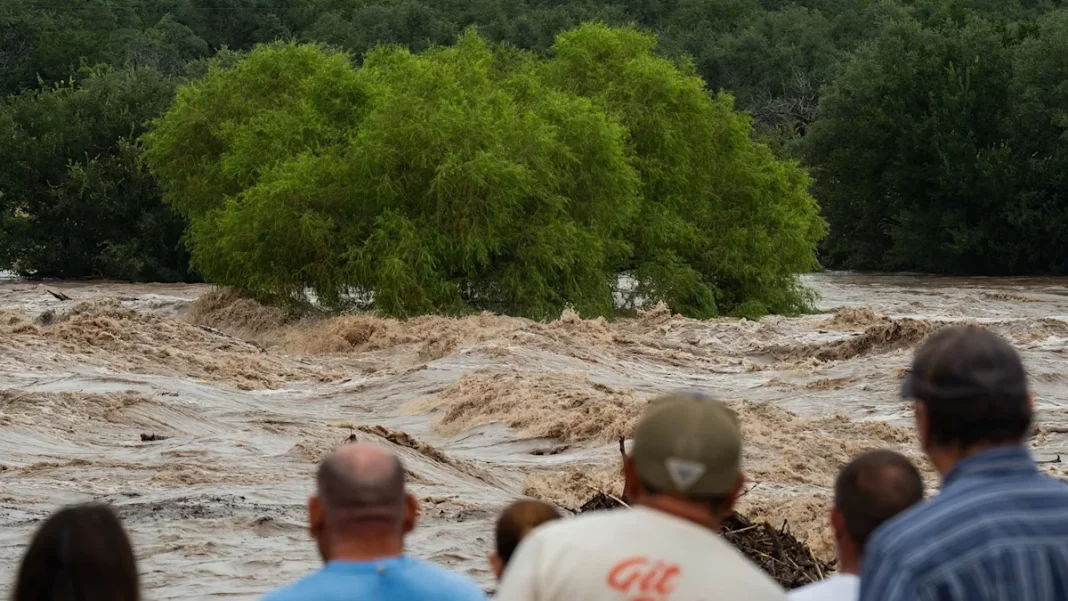
As the heat receded, giving way to violent storms in some places, two people died in central and eastern France and one in Germany’s southern state of Baden-Wuerttemberg as a result of falling trees or a lightning strike.
A “supercell” thunderstorm brought strong winds and hailstones measuring up to 5 cm (2 inches), with drivers seeking shelter under a motorway bridge outside Stuttgart due to the hail. Residents in the state were told to continue to expect severe weather on Friday.
In northeast Germany, firefighters were hoping for rain to help quell a wildfire at the Mueritz National Park that has been burning for nearly a week, their efforts hindered by unexploded ammunition at a former military training facility.
SPAIN BURNING
Spain’s weather agency AEMET warned temperatures would start rising again on Saturday, with highs potentially reaching 42-44 C in parts of the Andalusia and La Mancha regions next week. Forecasters also warned of an extreme wildfire risk as hot, dry air from North Africa advances across much of the country.
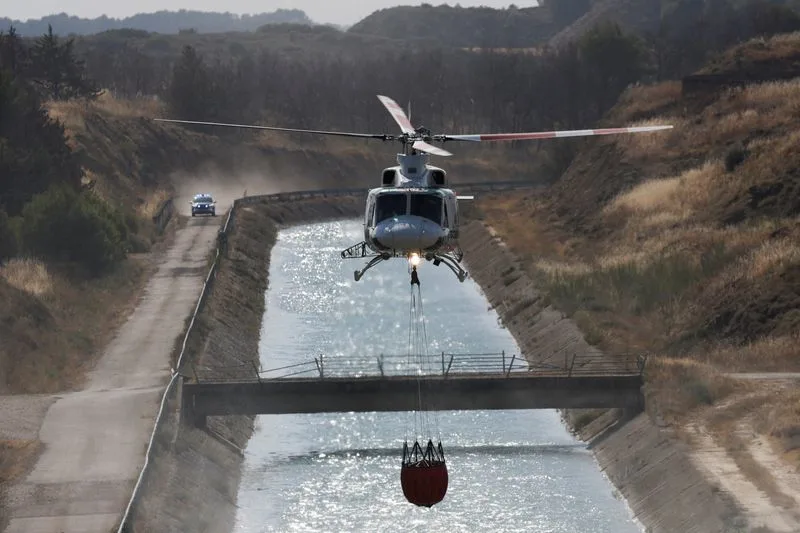
The wildfire near Ores in the northeastern region of Aragon expanded overnight to more than 12,000 hectares (46.33 square miles), with 300 military emergency responders deployed to contain the fire and helicopters operating in continuous rotations, at times with up to five aircraft loading water simultaneously.
Firefighters were also tackling wildfires near Madrid and in Guadalajara province, where around 1,500 hectares have burned and a summer camp was evacuated as a precaution. A week ago, one of Spain’s deadliest wildfires on record killed at least 13 people, mostly foreigners, in the southern province of Almeria.
EXCESS DEATHS
Last week, the World Health Organization warned that Europe could face “more deadly weeks ahead” from new heatwaves forming over the Atlantic.
Scientists monitoring so-called excess deaths said there were thousands more fatalities recorded than normal during a heatwave that swept through Europe and Britain at the end of June.
“Nearly 10,000 excess deaths, and the summer is not yet over,” said Dr Hans Henri P. Kluge, WHO Regional Director for Europe, criticising governments for “still treating heat as a weather event rather than a health emergency”, despite existing tools and WHO guidance to prevent most of these deaths.
(Reporting by Emma Pinedo in Madrid, Miranda Murray in Germany, Dominique Vidalon and Forrest Crellinin in Paris, Jennifer Rigby in London, Writing by Andrei Khalip; Editing by Alexandra Hudson)