
David Hobson has provided me with a story I think is one of the best tributes to Alvin Weinberg. If you know David, you will appreciate his writing style and the way he presents details. Enjoy the read.
***
This article is a brief reminder about a hearing that took place in Washington 53 years ago, as well as a long-delayed appreciation and tribute to Alvin Weinberg. I told the story of the hearing in 2012 at an Oak Ridge Institute for Continued Learning class titled, “Act Responsibly and Tell the truth: The untold story of the ECCS hearing.”
The story itself is complicated, and I will skip over many of the details. The principal driving force behind the hearing was the need for a set of rules that would govern the licensing of emergency core cooling systems (ECCS) for nuclear power reactors. The Atomic Energy Commission (AEC), in its role of both promoting and regulating atomic energy, was beginning to license larger and larger power reactors. This was causing concerns that the emergency systems that should operate during a Loss-of-cooling accident (LOCA) might not prevent a serious meltdown of the reactor core.
In 1968, to combat those concerns, the AEC funded research at Oak Ridge National Laboratory (ORNL) and the Idaho Nuclear Engineering Laboratory (INEL) to examine the damage a LOCA might do to the Zircaloy cladding tubes that contain the uranium oxide fuel pellets.
The group I was in was led by Phillip Rittenhouse and was concerned with the oxidation, embrittlement and rupture of the cladding when exposed to high temperatures in a steam environment. George Lawson, in the ORNL Reactor Division at Y-12, provided the steam-exposed tubes. For two years I conducted tests for oxidation and embrittlement as a function of time and temperature. I also studied the rupture behavior of pressurized, unexposed tubing.
We reported all the experimental results to the AEC’s Reactor Development and Technology Division (RDT), to each of the four reactor manufacturers and to INEL. It soon became apparent that our results disagreed with those being reported to the AEC by the nuclear industry. This particularly annoyed our AEC sponsors. Milton Shaw, the director of RDT, who controlled our funding was really angry. So, early in 1971 he terminated our funding, with the statement, “We were creating more problems that we were solving.”
Results from INEL were creating similar problems for the AEC. Some of those results also disagreed with what the industry was reporting. All the disagreements were becoming public knowledge. So, with 55 large nuclear power plants planned or under construction, the AEC formed an ad hoc task force to review the ECCS problem. This 14-member group, all AEC engineers or physicists, was tasked with reviewing data and policy recommendations provided by industry and the national laboratories. The group held extensive meetings with the reactor manufacturers, but had little interaction with the laboratories. No one on that task force asked Rittenhouse, me or anyone else at ORNL for our thoughts on the subject.
In June 1971, the AEC issued an interim report on recommended criteria for licensing ECCS systems. When we received a copy, we were astounded! None of the concerns we had stated in our reports were acknowledged. We had been ignored. In December 1971, Bill Cottrell, the director of the nuclear safety program at ORNL, drafted a letter to Manning Muntzing, the AEC director of regulation, detailing our concerns about the interim criteria.
The gist of the letter was summarized by the statement: “We are not certain that the ECCS policy adopted by the AEC will provide assurance that such systems will be effective in the unlikely event of a loss-of-coolant accident.”
Needless to say, the letter did not make the AEC happy. In a telephone call, Muntzing ordered ORNL management to withdraw it. It was withdrawn, with the explanation that it had not received senior laboratory approval.
By this time, the AEC had really backed itself into a corner. The controversy had become public knowledge, and it could no longer be stonewalled. They decided that the only way out was to hold a formal rulemaking hearing on the adequacy of the June 1971 Interim Criteria report drafted by the ad-hoc task force. I believe the AEC figured that the pressure from the combined forces of the AEC and the nuclear industry would overcome any further input from the laboratories. This brings this article to the point where Weinberg and his actions became an important part of our lives.
Rittenhouse, Lawson, Cottrell and I each received phone calls to come to ORNL Director Weinberg’s office. He told us about the planned hearing and that the four of us had been ordered by the AEC to be technical witnesses. We were to be subjected to cross-examination, under oath, by each of the participating groups.
These would be Westinghouse, General Electric, Babcock and Wilcox, Combustion Engineering, the Consolidated National Intervenors and energy utility representatives. With the probable exception of the intervenors, none of these groups were going to like anything we said.
Weinberg must have noticed our reactions to the news. He then told us something that I shall ever forget. He said, very seriously, that there were two things we must do and, by doing them, our jobs would be safe. My initial thought was he was going to make us follow a party line. Instead, he gave us the only instructions he would ever issue about the hearing. He told us we must “Act responsibly and tell the truth.”
I remember it was several days before the full impact of what he said took effect. He had let us know that he trusted us and that he believed in the work we had done. Part of that trust recognized that we would be representing ORNL in a very hostile environment, where it’s reputation would be under attack. This was a heavy load to carry. On the other hand, Alvin’s single instruction gave us the freedom to do what he told us to do. We would have told the truth anyway, but he also allowed us to determine for ourselves how we would act responsibly.
This was a great gift, one that allowed us to get our testimony into the hearing record. We knew that neither the reactor manufacturers nor the utility representatives were going to ask us questions that would let us say something they did not want in the that record. There was a way, however.
In November 1971, Henry Kendall, a physics professor from MIT, Daniel Ford, a Harvard graduate who was to be the technical interrogator for CNI in the hearing and James Mackinsey, who chaired the Union of Concerned Scientists visited ORNL to learn more about our work. It was evident they were not opposed to nuclear power; they were against how the AEC was regulating it.
This visit sparked an idea. Phil contacted Dan Ford and arranged for him to meet secretly with Phil and me before and during the hearing. Although Dan had access to all of our and industry’s reports, he did not have time to go through them in detail. We answered his questions and emphasized what we needed to add to the hearing record.
These meetings resulted in Dan’s being able to ask us under oath the questions that allowed us to testify about our work for the record. As far as I know, our collaboration with CNI was known only to our families until I taught the ORICL class in 2012. The secrecy was necessary. If Milton Shaw or any of the industry had known about it, I doubt even Weinberg could have saved our jobs.
The hearing lasted for 125 days of cross-examination filling 22,000 pages of sworn testimony. Phil Rittenhouse spent a total of 80 hours being questioned and I joined him for 40 of those. The ORNL witnesses were questioned from March 7 until March 10, on March 20 and 21 and from April 18 through 26 of 1972. While the CNI questioning was fairly easy, that of the industry was exhausting. They did everything they could to break down our testimony or make us contradict ourselves.
On April 26, 1972, we were dismissed for the final time. The hearing itself, and its aftermath, would continue until Dec. 11. At this point none of us were sure of what we had accomplished. We felt we had done what Weinberg has told us to do. We had told the truth on the witness stand and, in our eyes, had acted responsibly. We had done what we needed to tell our story.
We had to wait until Dec. 31, 1973, to hear the final story of the hearing. The AEC issued a document titled, “Docket RM-50-1-Acceptance Criteria for ECCE Systems for Light-Water-Cooled Power Reactors.” Of the four main criteria that had been listed in the previous document, the one we had taken so much flak about, had been changed to meet our arguments.
The new criterion was written, “The criterion specifying that the calculated maximum temperature of the Zircaloy cladding surrounding the fuel should not exceed 2300F (2,300 degrees Fahrenheit) has been replaced by two criteria, one lowering the allowed peak temperature to 2200F, and the other providing a limit on the maximum calculated local oxidation.” This was exactly what we had been arguing for.
So, what else resulted from the hearing? The AEC no longer existed. It was split into the Energy Research and Development Administration (ERDA, now the U.S. Department of Energy or DOE) and the Nuclear Regulatory Commission (NRC). This eliminated the single entity doing both regulation and promotion of nuclear energy.
Following the split, the NRC funded new research programs at ORNL, INEL and Argonne National Laboratory that essentially redid and refined much of our prior work. Initially, under orders from Washington, both Phil and I were precluded from any interactions with our colleagues or anyone else on the subject of fuel-rod-failure.
It was some time before the results from the new programs became available. The technical problems involving coolant-cladding interactions that first came to light in the late 1960s and early 1970s finally reached resolution. The major result for the four ORNL witnesses was that our original work was found to be correct. The earlier results we had defended during the hearing had been added to and refined, but they were never disproved.
I was 37 when the hearing took place. Now, at 91, I am probably one of few surviving participants of the hearing. I imagine that my three co-participants, Phil, George and Bill, would have agreed with me that Weinberg played a large role in what we did. His order that we must act responsibly and tell the truth gave us a solid foundation to withstand the pressure of the hostile cross-examinations we faced.
Admittedly, we may have gone beyond what he had in mind about acting responsibly, but I suspect that if he had found out about our interactions with the intervenors, he might have smiled.
***
Thank you, David, for a detailed description of what must have been a difficult time for you and the rest of the team. Your recall of Alvin Weinberg’s “Act responsibly and tell the truth” is a most appropriate tribute to a man who not only told you that but practiced it as well.
D. Ray Smith is the city of Oak Ridge historian. His “Historically Speaking” columns are published weekly in The Oak Ridger.

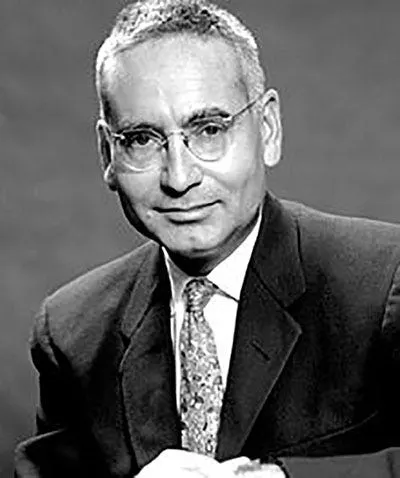
Alvin Weinberg

David Hobson

D. Ray Smith
This article originally appeared on Oakridger: How one ORNL leader saved the truth about nuclear safety