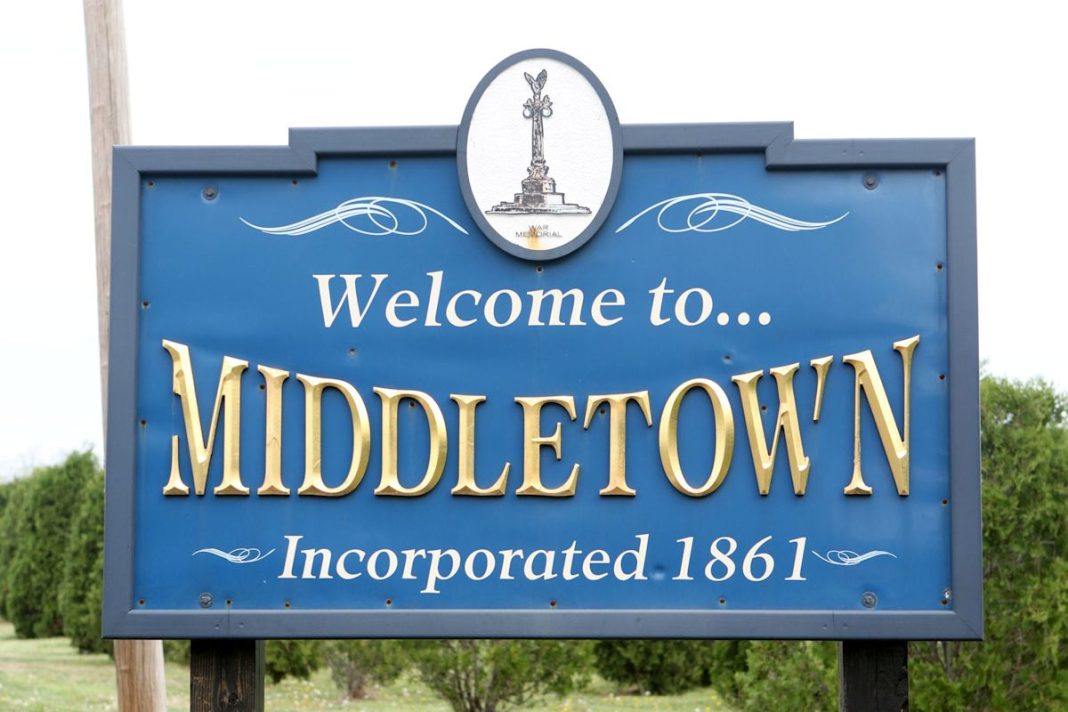

In Delaware’s House of Representatives District 8 race, five candidates will compete in two primaries to determine who represents the Middletown area.
Incumbent Sherae’a “Rae” Moore, a Democrat, faces a challenge in the Democratic primary from Lissa Brutus and Matt Powell.
And for the Republican primary, Watara T.F. Heath is running against Gary Taylor.
House District 8 covers much of Middletown and nearby southern New Castle County communities, including Willow Grove Mill and surrounding residential areas along the U.S. 301 corridor.
Top issues running through these races include Middletown’s growth, infrastructure to match the growth, taxes and property reassessments.
Delaware Online/The News Journal sent each candidate in this election an identical questionnaire. Their responses are published below, edited only for grammar and brevity.
Democrats
Sherae’a ‘Rae’ Moore

Sherae’a “Rae” Moore
Name: Sherae’a “Rae” Moore
Residence: Middletown
Age: Did not answer
Occupation: Educator and legislator
Education: Bachelor of Arts in English, Master of Arts in Public Policy and Administration, Master of Education in Secondary Education
Campaign website: mooreforde.com
Question: Why are you running for office, and what is the most important issue facing your district?
Answer: I am running for re-election to keep delivering real results for Middletown families. As a mom and special education teacher, I know how tough it is right now to pay for groceries, healthcare, and housing. I fought to end child hunger in our schools, and I have worked to help our seniors stay in their homes. The biggest challenge facing our community is finding the right balance with our rapid growth. We need homes that working families can afford, but new developments cannot outrun our roads and schools. I will continue partnering with local leaders to fix traffic, protect our farmland, and keep Middletown a great place to live.
How should Delaware ensure property reassessments are fair and prevent sharp tax increases for homeowners?
Property taxes fund the essentials our community relies on every day, including our local schools, emergency services, and first responders. But collecting those needed funds should never push families or seniors out of their homes.Because property values were not updated for decades, our communities are now dealing with years of changes all at once. Going forward, Delaware must require regular, predictable updates so sudden tax shocks never happen again.We must also make sure large commercial properties are assessed fairly so everyday homeowners do not carry an unfair share of the load. Homeowners need real protection right now. I introduced House Resolution 18 urging our counties to study a property tax freeze for seniors, and I will continue fighting for a clear, accessible appeals process and gradual phase-ins for large increases.
What changes, if any, would you make to Delaware’s education funding system, and how would you improve student outcomes?
Delaware’s eighty-year-old unit count funding system is outdated and ignores what our classrooms actually need today. As a special education teacher, I see every day that students learn differently and need different tools to succeed. I support moving to a hybrid funding model that ensures state resources follow the students who need them most, including students with disabilities, English learners, and children from low-income families.At the same time, our schools must be accountable to the taxpayers and communities they serve. Our public schools should serve as true community hubs that support whole families and the broader community with essential resources. They must also respond directly to our local economy by expanding career training, technical education, and hands-on apprenticeships. We need to invest in our classrooms and support our educators, but that investment must come with clear accountability and real results for our students, working families, and local businesses.To improve student outcomes, we must fully implement universal free school meals. When children are hungry, they cannot focus, learn, or reach their full potential. Providing healthy meals directly supports working families, removes a major barrier to learning, and ensures every single child walks into the classroom ready to succeed.
Delaware continues to experience significant growth. How should state and local governments balance development with concerns about traffic, infrastructure, farmland and open space?
As a representative of one of Delaware’s fastest-growing regions, I know and appreciate the economic growth bringing real opportunity, but it cannot come at the expense of our daily quality of life. Development should never outrun our community’s infrastructure. State and local leaders must work together so that roads, emergency services, water/sewer systems, and school capacity are fully planned and funded before major new projects are approved. We must also make sure large developers pay their fair share for the traffic improvements and road upgrades their projects create, instead of passing the bill onto local taxpayers. At the same time, we must protect the character of our community, and greenspaces directly contribute to the health and wellness of our neighborhoods. I will continue supporting strong investments in the Delaware Agricultural Lands Preservation Program to save our family farms and protect open spaces. Responsible growth means balancing new homes and jobs with smart planning that keeps our roads moving and protects our community for the future.
What is one specific action you would support to make Delaware government more transparent and accountable?
One specific action I support is moving the state budget and major spending bills earlier in the legislative session so they are not rushed through at the last minute. Too often, Delaware’s multi-billion-dollar state budget and grant bills are voted on in the final hours of session, late at night, with little time for the public or lawmakers to fully review them. Rushing our state’s most important spending decisions does not serve the taxpayers. Moving appropriations earlier in the year gives families, community leaders, and legislators the time they need to read the details, ask tough questions, and ensure funding goes where it is needed most. Bringing the budget process into the daylight ensures real accountability for every taxpayer dollar.
What transportation or infrastructure project should be the state’s top priority, and how should it be funded?
Delaware must make public transportation and smart-growth infrastructure our top priority. We cannot simply pave our way out of traffic. Widening roads eats up open space and only invites more cars over time.Instead of car-centric sprawl, the state should invest in expanding frequent, reliable public transit that connects our southern New Castle County communities with jobs, schools, and medical centers across Delaware. We also need safe, connected sidewalks, bike paths, and walkable town centers that keep our neighborhoods safe and accessible for everyone. This work should be funded by pairing federal transit grants and state infrastructure dollars with developer contributions. Large builders should help pay for transit shelters, bus corridors, and pedestrian safety improvements that keep our community connected without destroying our quality of life.
What should Delaware do to address rising housing and cost-of-living challenges?
Addressing Delaware’s cost-of-living challenge means giving families real relief on their biggest monthly bills.First, we must increase the supply of starter homes and workforce housing so our teachers, first responders, and young people can actually afford to buy a home and stay in our community. We also have to protect seniors on fixed incomes from rising property taxes so they can age in place without fear of being priced out. Second, the state must take direct action to lower everyday kitchen-table expenses. That means keeping school meals free so parents save on groceries, capping prescription drug and healthcare costs, and expanding affordable child care for working parents. When we pair affordable housing with lower daily costs and strong local jobs, we make sure Delaware remains a place where regular working families can build their lives and thrive.
Lissa Brutus

Lissa Brutus
Residence: Middletown
Age: 39
Occupation: Commercial real estate appraiser
Education: Bachelor of Science in Business Management
Campaign website: lissabrutus.com
Question: Why are you running for office, and what is the most important issue facing your district?
Answer: I’m running because the Middletown area is growing faster than almost anywhere in Delaware, and too many families feel that growth happening to them rather than for them. I’ve spent my career as a commercial real estate appraiser helping people understand land, ownership, and how communities build, or lose, generational wealth, and I want to bring that expertise to Dover. The most important issue facing District 8 is managing this growth responsibly by making sure new development comes with the roads, schools, and infrastructure to support it, and that longtime residents aren’t priced out of the community they built. That means confronting rising housing costs, overcrowded classrooms, and traffic that grows worse every year. I believe in being the change you want to see, and I’m running to make sure working families, first-time homebuyers, and small entrepreneurs have a real seat at the table as our community’s future is decided.
How should Delaware ensure property reassessments are fair and prevent sharp tax increases for homeowners?
This is where my professional background matters most. Delaware’s counties went decades without reassessing, so when court-ordered reassessments finally hit, the swings were dramatic and confusing for homeowners. Fairness starts with regular, predictable reassessments, ideally on a rolling three-to-five-year cycle, so values never drift so far from reality that a correction becomes a shock. I support the revenue-neutral principle behind the reforms the General Assembly passed this year: when reassessment raises total assessed value, tax rates should be rolled back so homeowners can financially plan for the increase. I would protect the tools that let New Castle County set separate residential and commercial rates so homeowners aren’t forced to absorb a disproportionate share, and I’d expand relief for seniors and fixed-income residents through stronger exemptions and payment plans. Homeowners also need a transparent, accessible appeals process and clear notice well before bills arrive. As an appraiser, I’ll push for accuracy and honesty in how values are set, because trust in the system is what keeps it fair.
What changes, if any, would you make to Delaware’s education funding system, and how would you improve student outcomes?
Delaware still funds schools through a decades-old “unit count” system that doesn’t follow the student or reflect real need. I support the shift the Public Education Funding Commission is advancing toward a weighted, student-based formula that directs more resources to the students who need the most, including low-income children, English learners, and students with disabilities, while making funding more transparent and predictable. In a fast-growing district like ours, the formula also has to keep pace with enrollment so classrooms don’t stay overcrowded and new schools get built before they’re overdue. Better outcomes come from investing in what works by ensuring competitive pay to recruit and keep good teachers, early literacy and math support, mental-health counselors, and career and technical pathways that connect students to real jobs. I’d also protect and expand opportunity funding rather than treat it as temporary. Money alone isn’t the whole answer, but Delaware cannot ask for better results while shortchanging the classrooms doing the work.
How should state and local governments balance development with concerns about traffic, infrastructure, farmland and open space?
The Middletown-Odessa-Townsend area, where farmland is turning into subdivisions faster than our roads and schools can keep up, is a prime example of growth outpacing infrastructure. I don’t believe growth is the enemy; it brings opportunity and homeownership, but it has to be planned, not just permitted. In the time that I have served on the New Castle County Planning Board, I’ve seen up close how important it is to align zoning, transportation, and school capacity before approvals, not after. I support requiring development to pay its fair share of the infrastructure it demands, protecting our best agricultural land and open space through farmland preservation and conservation easements, and concentrating growth where infrastructure already exists rather than paving over every field. Smarter road design, safe options for walking and biking, and real coordination between the county and the state Department of Transportation would ease the traffic residents fight every day. Growth should strengthen our community’s character and tax base, not overwhelm the very things that make people want to live here.
What is one specific action you would support to make Delaware government more transparent and accountable?
I would require that major land-use and development decisions include clear, plain-language fiscal and infrastructure impact statements, posted publicly and well before any vote, so residents can see exactly how a project will affect their taxes, schools, and roads. Too often these decisions are made in language and on timelines ordinary people can’t follow. Transparency shouldn’t be a formality buried in a late-night agenda; it should be built into how government makes its biggest choices. I’d also support stronger, more accessible public-comment processes so residents have the most opportunities to be heard.
What transportation or infrastructure project should be the state’s top priority, and how should it be funded?
For our region, the top priority is fixing the road network straining under Middletown-Odessa-Townsend’s growth, particularly the congestion around US 301, Route 1, and the local connectors that funnel thousands of commuters through town every day. Residents lose hours in traffic that better-designed interchanges, signal timing, and safe pedestrian and bike connections could relieve. Statewide, I’d protect and modernize the aging roads and bridges we already have before building new capacity we can’t maintain. Funding should come from a mix of the Transportation Trust Fund, ensuring new development contributes its fair share through impact fees rather than leaving existing taxpayers with the bill, and the federal infrastructure dollars Delaware is eligible for. I’d also make sure fast-growing communities like ours get a fair share of statewide transportation investment, instead of always waiting at the back of the line while congestion gets worse.
What should Delaware do to address rising housing and cost-of-living challenges?
Housing is the cost-of-living issue underneath all the others, and it’s personal to me. My whole career is about ownership and building generational wealth. Delaware needs more homes at prices working families can actually afford, which means allowing a wider range of housing types near jobs and transit, streamlining approvals for affordable and workforce housing, and investing in the Delaware State Housing Authority’s programs for down-payment assistance and first-time buyers. I’d protect renters from sudden, steep increases and expand transitional and affordable housing for people working to get on their feet. Homeownership education and access to fair credit matter too, especially in communities still living with the legacy of redlining. On broader costs, keeping property taxes predictable, holding down utility bills, and growing good-paying local jobs all ease the squeeze. I want a Delaware where the people who work here can afford to live here and build lasting wealth, not just make rent.
Matt Powell

Matt Powell
Residence: Middletown
Age: 36
Occupation: Attorney
Education: American University – Washington College of Law, Juris Doctor; University of Delaware, Bachelor of Arts in Criminal Justice
Campaign website: powell4de.weebly.com
Question: Why are you running for office, and what is the most important issue facing your district?
Answer: I am running for Delaware State Representative because I believe our community deserves experienced, accessible, and accountable leadership. Having grown up in Middletown, I understand both the opportunities and challenges facing our district. The most important issue facing the 8th District is managing growth while preserving our quality of life. Rapid development has increased pressure on our roads, schools, utilities, and public services, while many families are struggling with rising housing and living costs. We need responsible planning that invests in infrastructure, strengthens our schools, protects open space, and ensures that growth benefits our entire community. We must also protect seniors from rising property taxes and keep Delaware affordable for working families. I am running because I have a proven record of service, a strong connection to the community, and the experience to deliver practical solutions. My goal is to ensure that every resident of the 8th District has a voice in Dover and a representative who will always put the community first.
How should Delaware ensure property reassessments are fair and prevent sharp tax increases for homeowners?
Property reassessments should reflect fair, accurate market values while protecting homeowners from sudden, excessive tax increases. Reassessment alone does not automatically increase taxes, but it can shift the tax burden among property owners. The process must be transparent, consistent, and easy for homeowners to understand. Delaware should strengthen the appeals process to ensure property owners can challenge inaccurate assessments. Local governments and school districts should also consider measures that phase in significant tax increases over time, based on assessments, to prevent homeowners, especially seniors and those on fixed incomes, from being priced out of their homes. As a legislator, I would support policies that improve transparency, provide taxpayer protections, and expand programs that reduce the property tax burden on seniors. Homeownership should be attainable and sustainable for Delaware families, and our tax policies should promote fairness while recognizing the financial realities many residents face
What changes, if any, would you make to Delaware’s education funding system, and how would you improve student outcomes?
Delaware’s education funding system should ensure that every student has access to a quality education while recognizing that students have different needs. I support reviewing the current funding formula to ensure resources are distributed fairly and directed toward students who need additional support. Improving student outcomes requires a balanced approach. We must strengthen early childhood education, expand career and technical education programs, support and retain qualified teachers, and increase accountability for measurable results. Success should be evaluated through academic achievement, student growth, graduation rates, and workforce readiness. Strong partnerships among schools, families, and communities are also essential. Our goal should be to provide students with the knowledge, skills, and opportunities they need to succeed in the classroom, in the workforce, and in life.
Delaware continues to experience significant growth. How should state and local governments balance development with concerns about traffic, infrastructure, farmland and open space?
Delaware’s growth presents both opportunities and challenges. Development should be guided by comprehensive planning that protects our quality of life while ensuring our infrastructure can support future growth. State and local governments must require developers to contribute their fair share toward roads, schools, utilities, and public services. Growth should not place an additional financial burden on existing residents. Protecting farmland and open space must remain a priority. Preserving agricultural land strengthens Delaware’s economy, supports our farming communities, and maintains the character of our region. We should encourage development in areas where infrastructure already exists while protecting environmentally sensitive areas and productive farmland. Traffic congestion is another growing concern. Transportation planning must occur alongside development approvals, not after communities become overcrowded. Responsible growth requires collaboration among residents, local governments, developers, and state agencies. By taking a balanced approach, Delaware can continue to grow while preserving the communities and natural resources that make our state a great place to live.
What is one specific action you would support to make Delaware government more transparent and accountable?
One specific action I would support is expanding public access to government information through a centralized, user-friendly online transparency portal. Residents should be able to easily access budgets, spending reports, contracts, meeting agendas, voting records, and other public documents without unnecessary barriers. Transparency strengthens public trust and encourages greater civic engagement. Taxpayers have a right to know how public funds are being spent and how decisions are being made. I would also support stronger reporting requirements and timely disclosure of government actions so residents can participate in the process before important decisions are finalized. Government works best when it is open, accessible, and accountable to the people it serves. Increasing transparency is one of the most effective ways to restore public confidence and ensure elected officials remain accountable to their constituents
What transportation or infrastructure project should be the state’s top priority, and how should it be funded?
Delaware’s top transportation priority should be improving the infrastructure needed to support our rapidly growing communities. In the 8th District, residents consistently identify traffic congestion, overcrowded roadways, and infrastructure that has not kept pace with development as major concerns. The state should prioritize roadway improvements, intersection upgrades, and investments in transportation corridors experiencing the greatest growth. Infrastructure planning must be coordinated with future development to prevent existing residents from bearing the costs of growth. Funding should come from a combination of state and federal resources, while ensuring that developers contribute their fair share through impact fees and infrastructure agreements. New development should help fund the roads, utilities, and public services necessary to support it. A proactive approach to infrastructure investment will improve public safety, reduce traffic congestion, and better prepare Delaware for future growth.
What should Delaware do to address rising housing and cost-of-living challenges?
Delaware must address both housing affordability and the rising cost of everyday living. Families and seniors are feeling the effects of higher housing costs, increased utility bills, and rising property taxes. We should encourage the development of diverse housing options, including workforce and senior housing, while ensuring that growth is planned responsibly and supported by adequate infrastructure. I also support efforts to reduce the financial burden on homeowners, particularly seniors living on fixed incomes. Expanding property tax relief programs and exploring ways to reduce school tax obligations for seniors would help many residents remain in their homes. At the same time, we must protect Delaware’s economic advantages, including our corporate franchise system, which significantly helps reduce the tax burden on residents. Addressing affordability requires a balanced approach that promotes economic growth, expands housing opportunities, and protects taxpayers. Delaware should remain a place where families can afford to live, work, and retire.
Republicans
Watara T.F. Heath

Watara T.F. Heath
Residence: Middletown
Age: 42
Occupation: Behavioral health clinician
Education: Counseling Psychology, Master of Arts & Administration of Human Services, Master of Science
Campaign website: wataraheath.com
Question: Why are you running for office and what is the most important issue facing your district?Answer: I believe government should be balanced, accountable, transparent, fiscally responsible, and guided by facts, not partisan rhetoric. We must protect taxpayers, use public resources wisely, and offer a hand up that promotes education, opportunity, personal responsibility, and independence while addressing mental health, substance use, homelessness, and public safety with both compassion and accountability. Our community also faces growing pressures from overpopulation, traffic congestion, loss of farmland, and poorly managed development. We need responsible growth that keeps infrastructure ahead of development and protects the character and quality of life that make our communities special. I am running for Legislative Hall to bring lived experience, practical knowledge, and common sense to government. Together, we can strengthen families, improve public safety, protect our communities, spend taxpayer dollars responsibly, and build a stronger Delaware for future generations.
How should Delaware ensure property reassessments are fair and prevent sharp tax increases for homeowners?Everything should be subject to a vote and public accountability. Some homeowners have been blindsided by sudden and astronomical increases in property taxes following reassessments, at a time when many families are already struggling with a difficult economy. We expect our elected officials to be honest, forthcoming, and proactive in communicating with and advocating for the citizens they serve. No district or state government should be able to raise taxes on residents simply because it can, or because of poor budgeting and mismanagement of appropriated funds. Taxpayers deserve responsible spending, transparency, and accountability for how their money is allocated. Equally important is having a fair, consistent, and transparent assessment process that treats every property owner equitably. Residential, commercial, and agricultural properties should be assessed according to their respective uses, characteristics, and fair market value, not through a one-size-fits-all approach.
What changes, if any, would you make to Delaware’s education funding system, and how would you improve student outcomes?We need greater transparency in school district budgets and a clear understanding of where taxpayer dollars are being allocated. We should identify and eliminate wasteful spending while ensuring that our educators, school administrators, and bus drivers have the support and resources they need to do their jobs effectively. When school budgets continue to increase while teachers’ salaries and classroom resources do not keep pace, we must take a closer look at how those funds are being spent. When appropriate, independent, bipartisan financial professionals should oversee district budgets to ensure taxpayer dollars are used responsibly and proposed budgets accurately reflect necessary expenses. Just as important, we must improve student outcomes by strengthening parental involvement. Parents should collaborate with educators and their children to ensure students have the resources, support, and accountability they need to succeed. We must move away from simply advancing students to meet statistics or graduation targets. Passing students through the system without ensuring they have the knowledge and skills necessary for the workforce is a disservice to our children, families, educators, and communities. Our goal should be to prepare every student for success, whether that means college, a skilled trade, or a career.
Delaware continues to experience significant growth. How should state and local governments balance development with concerns about traffic, infrastructure, farmland and open space?
First and foremost, farmland should be protected. It is an important part of Delaware’s heritage, economy, and agricultural identity. We must recognize that the loss of agricultural land affects every Delaware family. When farmland is converted to development, we lose productive land for local agriculture, reduce opportunities for family farms, and make it more difficult for farmers to preserve their land for future generations. At the same time, Delaware farmers face rising operating costs and other challenges that can make it increasingly difficult to remain profitable and sustainable. Our farmers have long been an important part of Delaware’s economy and a valuable source of food for our communities. Delaware needs responsible growth that balances population increases, housing needs, development, infrastructure, and the preservation of farmland. We must also be honest about the consequences of past planning decisions and recognize that unmanaged growth can place significant demands on roads, schools, utilities, and other public services. Government must provide balance and thoughtful planning, and that same principle should guide how we approach future development. Growth should be intentional, infrastructure should keep pace, and taxpayer dollars should be spent responsibly while protecting the farmland that remains.
What is one specific action you would support to make Delaware government more transparent and accountable?
Independent audits should be required and conducted by outside organizations with no financial or political interest in either political party. Random audits should be welcomed as an important safeguard, and the results should be made readily available to the public. Delawareans deserve to know not only where their tax dollars are being spent, but also whether that spending is producing measurable results and improving the services their families and communities rely on. Too often, taxpayers are told where the money is going and what services it is intended to fund, but they are not given clear evidence of the outcomes or value those investments are producing. Government must operate with honesty, integrity, transparency, and accountability. Delaware taxpayers should expect nothing less from their elected officials and public institutions.
What transportation or infrastructure project should be the state’s top priority, and how should it be funded?
One of the infrastructure priorities Delaware must address is the growing demand for energy and utilities, along with the rising costs that are placing an increasing burden on residents. We need to plan ahead to prevent future outages, improve reliability, and protect Delaware families from unaffordable utility bills and unnecessary price increases. This should not come at the expense of higher taxes or the unnecessary loss of farmland and open space. Delaware should explore responsible alternatives, including private investment, appropriate financing, and better long-term budgeting and planning by the state. Strong oversight of state budgets and finance committees, supported by independent outside auditors with proven financial expertise, can help ensure taxpayer dollars are being spent responsibly and infrastructure investments are delivering measurable results. Our goal should be reliable energy, responsible growth, and affordable utility costs without placing an unnecessary burden on Delaware’s residents.
What should Delaware do to address rising housing and cost-of-living challenges?
Delaware needs to clearly define what “affordable housing” means and establish measurable standards for determining whether these programs are actually meeting the needs of Delaware families. There is a narrative that affordable housing is being built through grant programs and federal funding, yet we continue to face significant housing affordability and homelessness challenges. We need greater transparency and oversight of how these housing developments are funded, planned, and managed, along with a better understanding of how rising housing costs and the overall cost of living are affecting our communities. These challenges can also have broader consequences for community stability and public safety, including concerns surrounding theft, shoplifting, and other property-related crimes. Delaware should invest taxpayer resources in solutions that strengthen communities broadly and provide opportunities based on need and clear, measurable outcomes, not simply on membership in a particular group.
Gary Taylor

Gary Taylor
Residence: Middletown
Age: 58
Occupation: Director, Victim Witness Assistance Program
Education: M. Ed
Campaign website: taylor4de.com
Question: Why are you running for office, and what is the most important issue facing your district?
Answer: I am running for office because I believe the government should be working for the people and not the other way around. I felt that decisions were being made in Dover that were not being made with the best interests of us and our families in mind. I felt that our government was losing touch with what is happening in our communities and in our homes. I know seniors on fixed incomes who were being challenged to be able to stay in their homes because our government couldn’t work within a budget. There was little accountability for those who had oversight responsibility when our school tax dollars were mismanaged. I have spent almost my entire adult life serving the citizens of Delaware. I look forward to representing Middletown in Dover and fighting for us. The most important issues facing District 8 are cost-of-living and growth. The cost of living keeps rising with little to no checks and balances, and growth creates infrastructure issues with our roads, schools, utilities, and public safety. All of this then negatively impacts our quality of life.
How should Delaware ensure property reassessments are fair and prevent sharp tax increases for homeowners?
To ensure property assessments are fair for both residential and commercial properties, I believe we should be using a consistent standard to evaluate the property value. The consistent standard for a residence should include: square footage, livable space, condition, location, acreage, and comparable sales in the area. The consistent standard for a commercial property should include square footage, condition, acreage, permitted zoning usage, and comparable sales in the area. The appeals process should be simple and easily accessible for homeowners and business owners so they can challenge an assessment that they believe is incorrect. The entire process needs to be transparent from start to finish, clearly identifying how the assessment was calculated and what comparable sales were utilized. When property values rise, the government should not assume they can spend the additional revenue. I would support making the assessments tax neutral so tax rates can be adjusted downward when property values increase. Seniors and homeowners on fixed incomes deserve particular consideration. I would support policies that provide greater predictability and protect homeowners from being taxed out of their homes. Fair assessments, responsible budgeting, and transparency can protect homeowners, while still providing for schools and governmental responsibilities.
What changes, if any, would you make to Delaware’s education funding system, and how would you improve student outcomes?
Delaware has initiated a new funding system that is going into effect this school year. It appears to be more transparent, student-centered, and have greater accountability. Therefore, at this point, I would not be proposing any new changes and will see what the results show. I will be hoping for the best as I know a lot of time, energy, and thought was put into it. However, as a State Representative, I will ensure that it meets its targeted goals and is completely transparent about how and where funds were spent. I will hold those accountable who should be held accountable for how our tax dollars are spent. Improving outcomes requires more than simply spending more. I would work with the school board, teachers, parents, and administrators to ensure that we are doing the best we can for our students. My personal thoughts are that we need to prioritize early literacy and math, career and technical education, workforce preparation, parental involvement, and remove classroom disruptions. Teachers need competitive compensation, and we need to make sure the funding reaches the classroom and supports effective instruction.
Delaware continues to experience significant growth. How should state and local governments balance development with concerns about traffic, infrastructure, farmland, and open space?
Growth is inevitable. I believe local governments, such as the Town of Middletown, should have the authority to control their growth within their jurisdiction. Their town elected them to run their town. The State should not override a local jurisdiction. I believe the necessary infrastructure supports should be in place, as much as possible, prior to new development occurring. Our current process of over-developing, then playing catch-up on infrastructure, is a broken system. State and local governments should require developers to account for the true costs their projects will place on roads, schools, utilities, wastewater systems, public safety, and other infrastructure. However, as we know, those costs then get passed on to the buyer, which makes the cost of buying a new home much less affordable. But we also can’t have unchecked growth. We must protect Delaware’s farmland, open space, and the character of our Middletown communities. As a State Representative, I would like to expand the grants that help preserve our valuable agricultural land and open space wherever possible. Same for our farmers. We need to support them as best we can so they can continue to operate.
What is one specific action you would support to make Delaware government more transparent and accountable?As a State Representative, I would want to expand and improve Delaware’s “Open Checkbook” system. I would want to expand it to a system that is easy to navigate for the average citizen. I would want it to connect appropriations, actual expenditures, contracts, grants, and measurable outcomes. Who received the money, was the money used for its intended purpose, and was the intended outcome achieved? Taxpayers should know where every dollar goes, its intended purpose, and have a measurable outcome. The final piece to the transparency and accountability piece, in my opinion, is timely and consistent audits, and when necessary, using independent auditors. All auditors’ findings should be made public and listed in this system, connected to the program/expense that was audited. Any corrective action suggested should be listed as well. I would advocate for full transparency on our tax dollars from collection to expenditure to return on investment. If we are spending taxpayer dollars responsibly, we should be willing to show taxpayers exactly where the money is going, why, and the result. I would also support not allowing non-disclosure agreements when tax dollars are being used as part of any settlement.
What transportation or infrastructure project should be the state’s top priority, and how should it be funded?I believe that creating reliable and affordable energy that is produced in Delaware should be our top priority. This will create a good number of local jobs that will also provide livable wages. This will also help with keeping Delaware affordable and competitive. The energy portfolio should be diverse where appropriate, so it allows for some flexibility. Federal funding should be sought whenever possible. Partnerships with utility and private investment companies when appropriate. Utilize existing state energy funding sources, and lastly, prioritize our state budget around it being a top priority. As a State Representative, I would see where we can allocate existing state funding and where we could make cuts in other state expenses to cover the costs. I would not support creating a new tax or raising an existing tax for the project.
What should Delaware do to address rising housing and cost-of-living challenges?
We need to look at it from a variety of perspectives. First, we need to look at controlling our utility costs, controlling taxes, streamlining permitting processes for businesses, and securing our franchise tax system so businesses stop leaving to incorporate elsewhere. Conduct regular audits to ensure that every tax dollar we spend is being spent for the purpose intended and having the outcome expected. As a State Representative, I would be looking to cut any programs that are duplicative, underutilized, or unable to demonstrate a solid return on investment. The government needs to live within its budget, as we expect our own families to do. The second part of this is to create, or attract, good-paying jobs here in Delaware. As I previously stated, I believe Delaware needs to create its own reliable and affordable energy. This will also help create good-paying local jobs and help keep our cost of living down. Addressing these issues can also reduce the overall cost of building the houses. Every dollar that we, as a government, add on a builder or business owner gets passed to the consumer. We need to do our due diligence when applying fees to protect the homebuyer/renter.
Contact Ryan Cormier of Delaware Online/The News Journal at rcormier@delawareonline.com or (302) 324-2863. Follow him on Facebook (@ryancormier) and X (@ryancormier).
This article originally appeared on Delaware News Journal: 5 candidates vie for Delaware House District 8 seat in Middletown